
Scroll

New Arrivals
New Arrivals
Quick View
£900.00
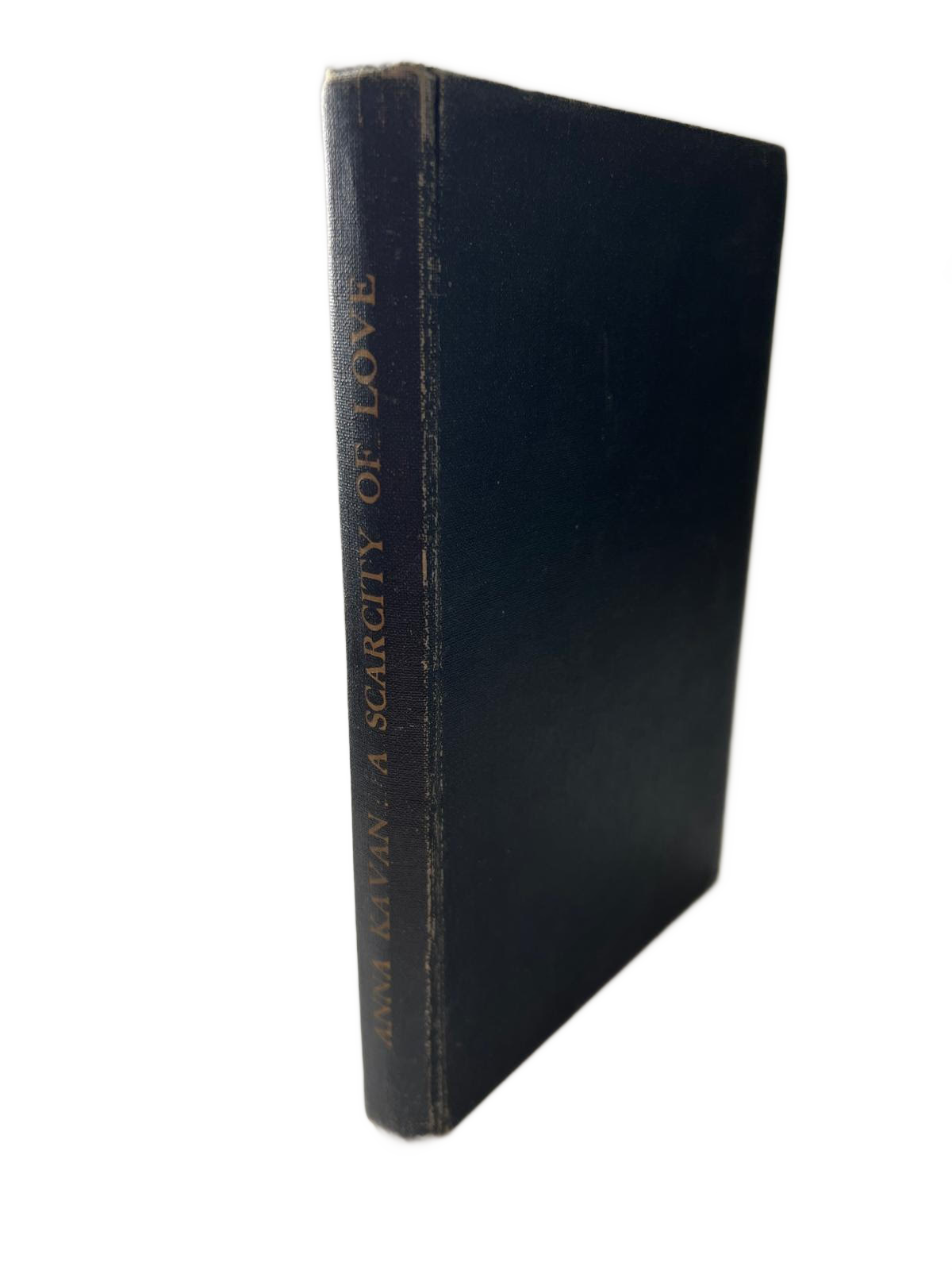
Southport: Angus Downie, 1956. First edition. 8ov. 200 pp. Printed by Merseyside Press Ltd. Absent dustjacket.
A truly scarce and true first edition of Kavan’s A Scarcity of Love. Published just after the midpoint of her career and following the financial failure of her novel Sleep Has His House, which saw her dropped by her Doubleday in the United States. Struggling to find a publisher Kavan paid Angus Downie to print only 500 copies, the majority of which were pulped after Downie went bankrupt. In the early 1970s, Peter Owen, after seeing success with her novel Ice, republished A Scarcity of Love alongside much of her bibliography. Unfortunately Kavan did not live to see much of this resurgence in her career as she passed away from heart failure in 1968.
A Scarcity of Love, despite its relative obscurity, is a wonderful example of the Kavanian style, combining semi-autobiographical work with haunting, dreamlike imagery. The novel follows the downward spiral a young girl finds herself in after being rejected by her cruel mother.
Black cloth board with gold text on spine. Slight lean to spine, with very small amount of wear to top and bottom. Very faint scratch to cover. Slight inward bend to top right corner. Very slight staining to top right corner pages. Slight inward bend to bottom back left corner. Small label from bookseller (Little Stour Books) on fixed end page. Despite the lack of dustjacket, this is an extremely scarce first edition in near very good condition.
Quick View
£100.00
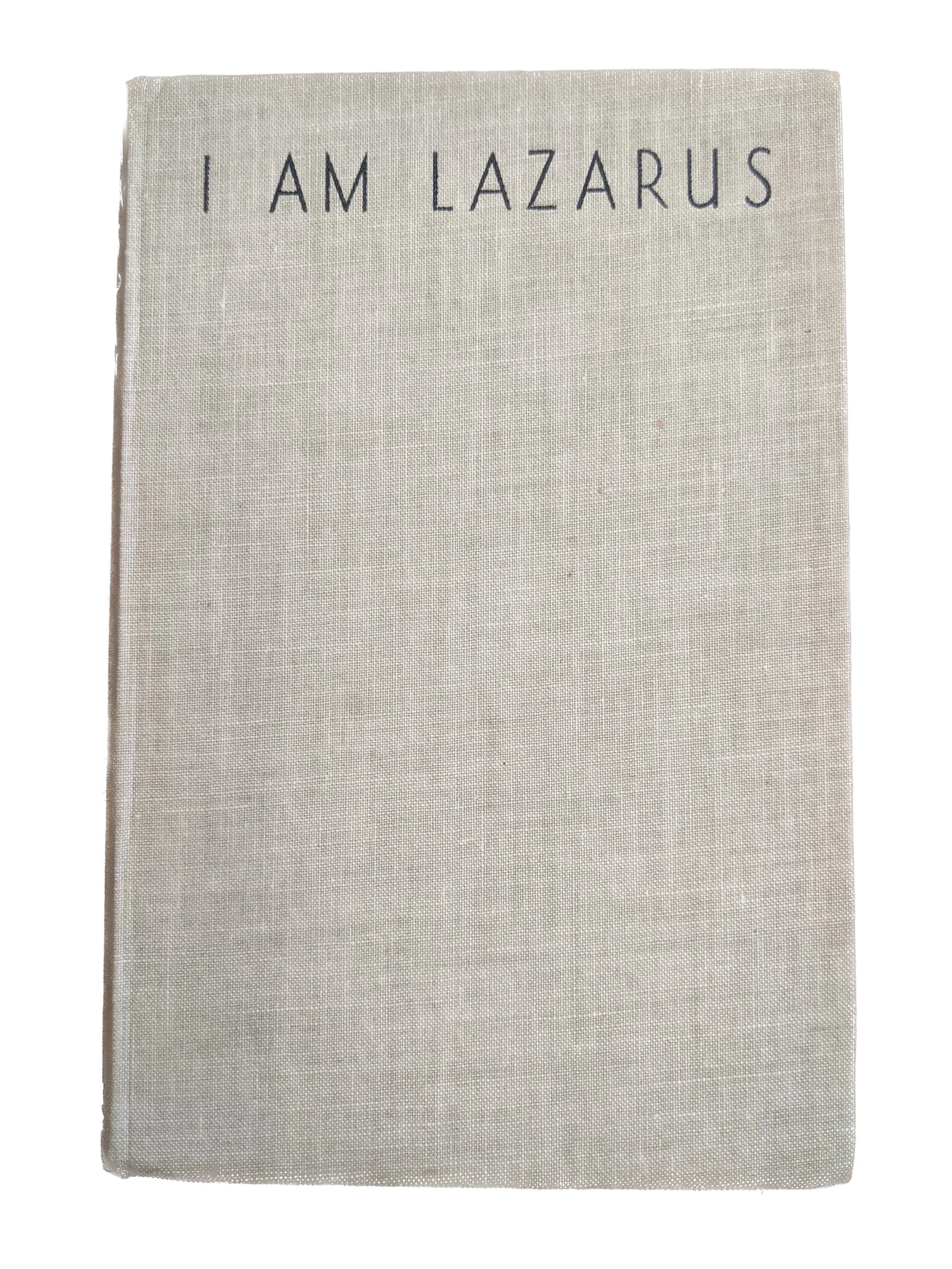
London: Jonathan Cape, 1945. First edition hardback. 146pp, 8vo.
After her discharge from a sanatorium, Helen Ferguson, then mostly known for her disquieting novel of repressed lesbian desire Let Me Alone, changed her name to Anna Kavan. Curiously, Anna was the name of that debut novel’s heroine. I Am Lazarus was published in 1945 and is a collection of stories similar to her previous book Asylum Piece; these are stories about people on the edge, suffering from depression and addiction. Some of these stories would later be collected in the posthumous book Julia and the Bazooka, which, along with her masterful apocalypse novel Ice, cemented her legacy as a fearless and highly skilled writer.
Features owner’s note detailing that it was purchased at WHSmith’s in Bournemouth in March, 1945. Dustjacket missing. Title on grey board and spine. Page 25 and 26 torn slightly.
Quick View
£800.00
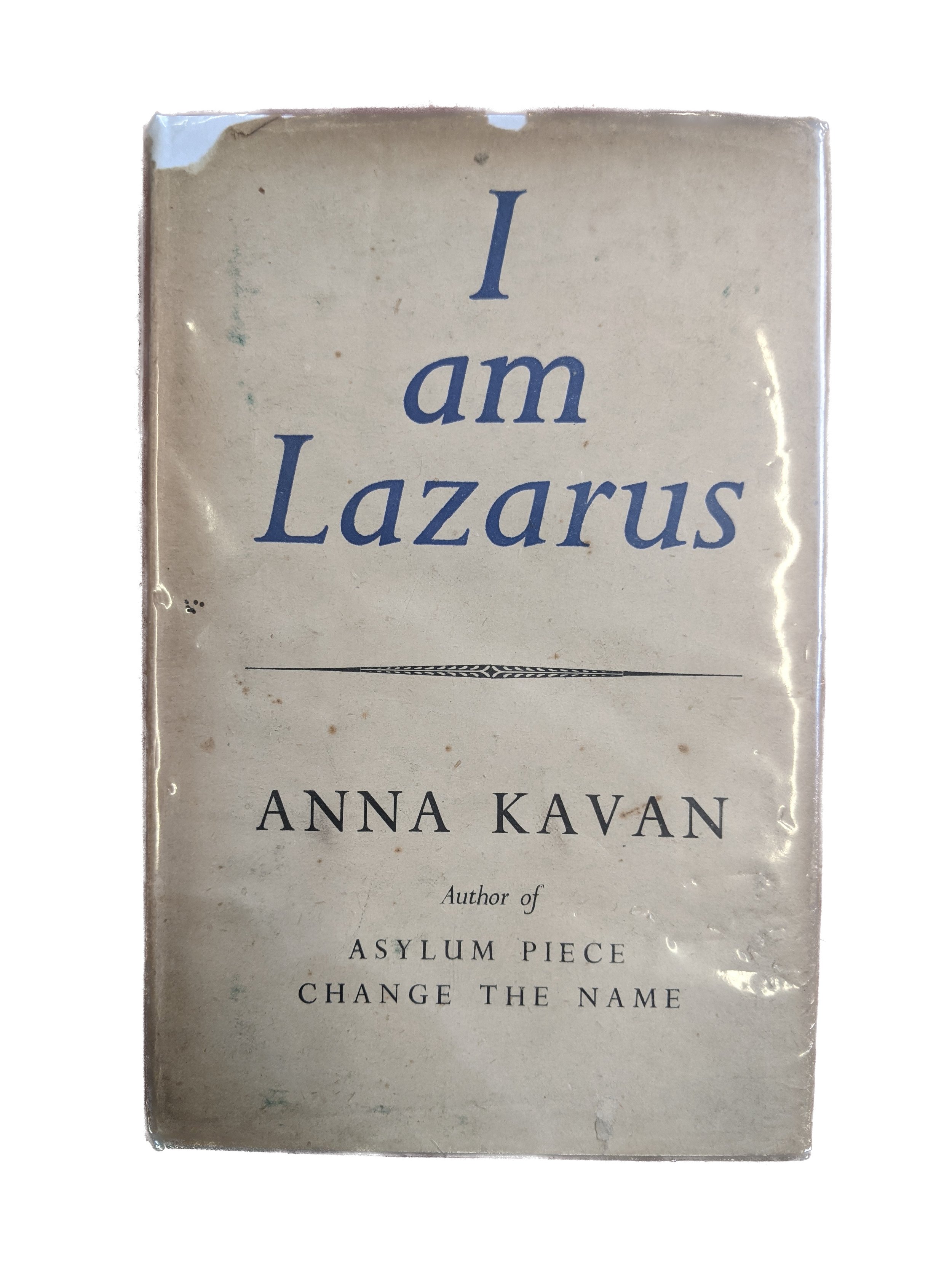
London: Jonathan Cape, 1945. First edition hardback. 146pp, 8vo.
After her discharge from a sanatorium, Helen Ferguson, then mostly known for her disquieting novel of repressed lesbian desire Let Me Alone, changed her name to Anna Kavan. Curiously, Anna was the name of that debut novel’s heroine. I Am Lazarus was published in 1945 and is a collection of stories similar to her previous book Asylum Piece; these are stories about people on the edge, suffering from depression and addiction. Some of these stories would later be collected in the posthumous book Julia and the Bazooka, which, along with her masterful apocalypse novel Ice, cemented her legacy as a fearless and highly skilled writer. This copy has the bookplate of Peter Hardiman Scott BBC journalist and broadcaster. Small inscription "To Daddy...2 - 4 - 45.” Dustjacket and book produced under wartime “Economy Standards”. Small chip and toning to spine. Open chips to top edge of dustjacket and dustjacket spine. Overall, in very nice condition, especially as the dustjacket is still intact. First edition. Scarce.
Quick View
£45.00
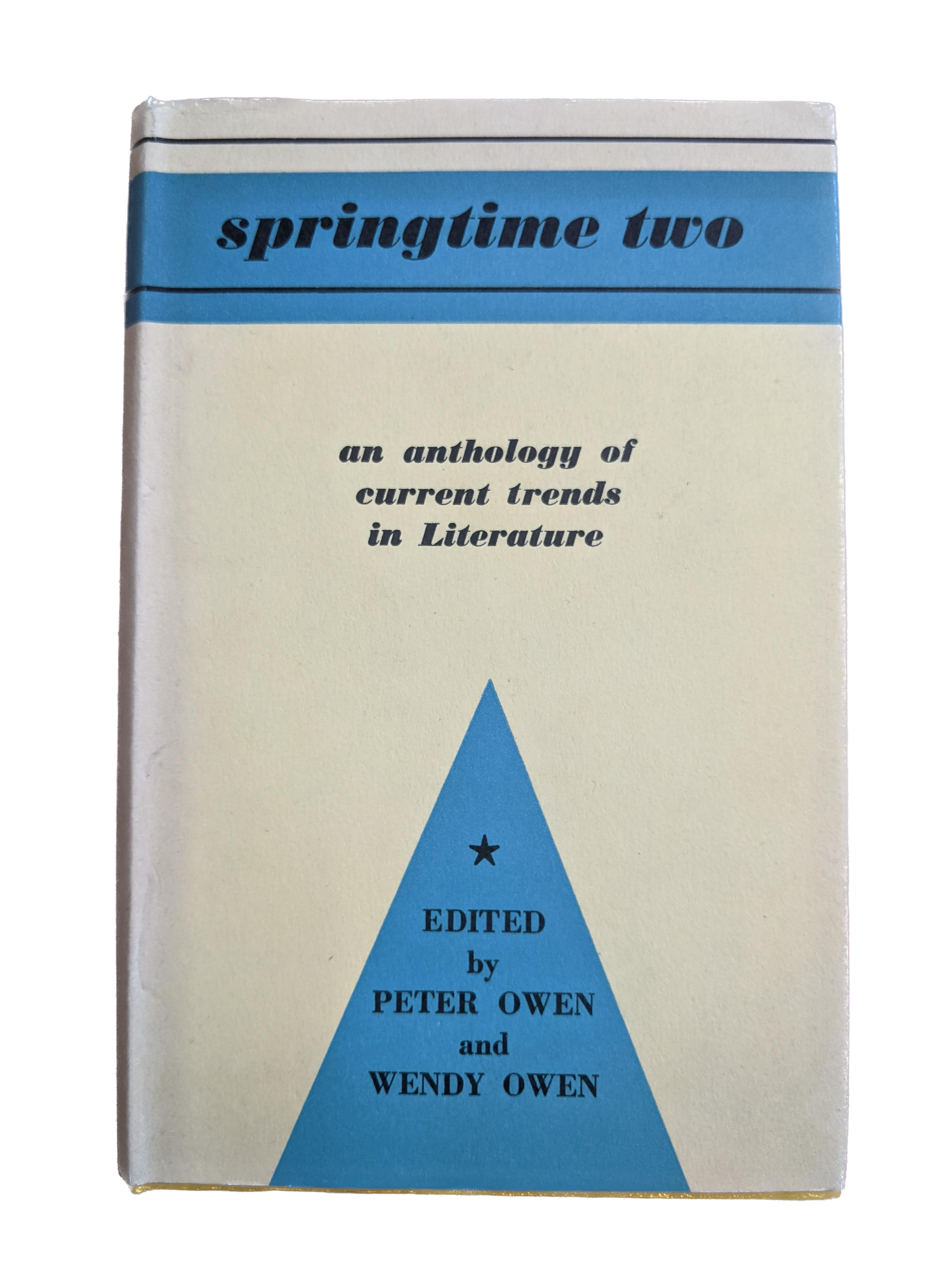
London: Peter Owen, 1958. First edition hardback. 128pp, last two pages blank. 8vo.
An “anthology of current trends in Literature” edited by the publishers Wendy and Peter Owen. This collection includes work by well-known writers such as Anna Kavan, rarely anthologised, as well as Muriel Spark and Stevie Smith. The Kavan story collected here was also published in the book A Bright Green Field and Other Stories, which Peter Owen also published in 1958. The purpose of this book was to showcase the range of contemporary literature that Peter Owen were releasing.
Yellow leather binding. Yellow dustjacket, faded on spine. Unclipped flaps. Very good copy.
Quick View
£1,200.00
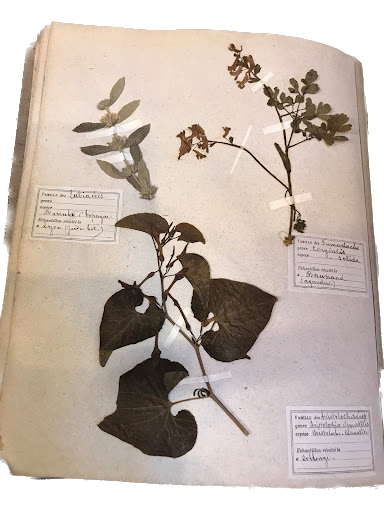
Paris: 1884-1931. Printed album, with botanic specimen samples pasted in throughout, hand-labelled with “Famille”, “genre,” “espèce,” as well as dates and places collected. Large 4to. i, 2-12, 32 specimen pages, interleaved with card pages to protect specimens.
This album was published and printed blank by Michel Engel, and includes an introduction (in French) explaining how to use this volume. This copy was likely filled out in a woman’s hand, although their identity is unknown. Some specimens use repurposed commercial labels including “Creme de Beaute”. The samples and labelling range from the tidy student’s hand of earlier samples to pencil written looser hand of the later samples, providing something almost like a narrative in botany.
Bound in brown cloth lettered black at front.
Cloth cover stained slightly and split showing internal binding on left edge and smaller split on bottom edge. Spine stained. Back cover stained at bottom. Slight lean to spine. Contents tattered due to being actively used as an album for many years.
![Ocean Mosses compiled by Edward Wing Howland & Gulielma (Ellison) Howland [Album]](https://images.squarespace-cdn.com/content/v1/5e7541426a90d340b980ae06/b63a4838-a60c-4172-a0c4-249bd6fdc712/oceanmosses1.jpeg)
Quick View
£7,500.00
New Bedford: 1849. Folio (160 x 210 mm), 60 leaves, 58 with specimens mounted on white card with handwritten paper labels slipped into mount below each. Some specimens include multiple species with identifications or have tentative identifications. Full brown calf with gilt title to spine label and raised bands. Double-ruled border with botanical tooling at corners. Slightly bowed and some wear with peeling to calf at edges. In very good condition. Gift inscription, date, and location in a neat calligraphic hand on the ffep.
A full album containing colourful seaweed specimens collected and mounted with purpose, precision, some decorative flair and interest in science. One specimen is in the shape of a cross, the rest are mounted with care to demonstrate the structure of each example with best effort made to label each specimen with its binomial name in Latin.
The album was created by Quaker merchant Edward Wing Howland and his second wife Gulielma (Ellison) Howland and sent as a gift to Edward's older sister Susan (Howland) Howland while she was traveling and preaching in Ireland accompanied by her husband George Howland. The Howlands were part of a large, interconnected, and prominent New England family.
Having come over from England, seaweed collecting was becoming more popular by the 1840s in New England. At this time the anti-slavery movement was in full swing and many Quakers were involved in the cause. Seaweed albums and collections were a feature of anti-slavery bazaars organised to raise money for the movement [Jao]. Christine Jao has argued that seaweed albums were used in anti-slavery circles “to shift the Atlantic Ocean from a place of violence and separation into a space of witnessing and connection”, and that mounting seaweed in albums with care and precision emphasised helped illustrate “godly design”.
Although we do not have specific evidence of the Howlands' view of abolition and the anti-slavery movement, George Howland is directly referenced in Frederick Douglass’s memoir as “a man of great industry; a hard driver, but a good pay-master.” Douglass worked on Howland’s whaling ships and he noted that he ”got on well with” Howland [Douglass, p 256]. And the Howland’s house at 245 Walnut Street is now part of New Bedford’s Abolition Row historic district, associated with the Underground Railroad.
It is possible that Edward and Gulielma Howland were inspired to create their album by seeing other sea-weed albums at Anti-Slavery events. Accompanying the album is a letter from Edward and Gulielma to Susan encouraging her to give the album away. Their Quaker linguistic traditions are clearly marked, stating "thee is at liberty to present them [the mosses] from thyself to any one of thy many kind friends, whom thee has met with in that far distant land."
Edward and Gulielma also describe harvesting the seaweed during winter wanderings on the shore near Bay View, their home at Clarks Point; the letter shows their spiritual association with nature and the sea:
“These winter specimens of Ocean Mosses which we have procured from our own Shore; gathering them from the foaming surge as it came rolling in; their little fibres often stiffened by the floating ice, yet still retaining that delicacy of color + completeness of finish, which pertaining only to the works of an Almighty God, who made all things perfect.”
Susan, a married mother of fourteen children, was a prominent Quaker preacher. She and George sailed for Liverpool, England in August 1848 for a European tour. Her itinerary was noted in the Quaker press; it included attending Yearly Meetings of the British Quakers in London and Ireland. She arrived in Ireland in February 1849. The gift inscription on the flyleaf of the album is to “May Malcomson / From her Attached Friends / George & Susan Howland / New Bedford / Massachusetts / North America.” The date of 1849 has been added in a different ink and different hand, possibly at a later date. Mary “May” (Fennell) Malcomson was part of a wealthy Quaker family in Clonmel, co. Tipperary, Ireland.
A remarkable survival of amateur science in an anti-slavery era, and a unique early transatlantic example of scientific - and religious - exchange.
Sources:
Frederick Douglass, Life and Times of Frederick Douglass: from 1817 to 1882.
William M. Emery, The Howland Heirs, E. Anthony & Sons, 1919.
Charline Jao, Flowers of the Sea: https://commonplace.online/article/flowers-of-the-sea/
Anne Louro, Preliminary Study Report, Proposed Abolition Row Local Historic District

Quick View
£200.00
London: Darton and Co., not dated. Octavo. 170 x 104 mm. xvii, 158pp (20). Externally smart with a little rubbing and bumping to the extremities. Tear to cloth at top. Spine slightly faded with a few marks to boards. Small splits in the cloth to the head of the spine. Front hinge just starting but firm. Internally, firmly bound. Pages are very bright with the odd small spot. Light spotting to the endpapers with minor age toning.
A striking second edition of this illustrated study of algology originally published in 1848. With a colour frontispiece and colour vignette to the title page and tissue guard between. Ten plates, five hand-coloured. Striped brown moire covered boards with variegated black horizontal stripes and stamped decorative framing and gilt marine illustration at center. 20 pages of adverts at rear.
Marine Botanist is an early book on the study of algology, written by Isabella Gifford, a Welsh-born botanist and algaeologist. Like many women science writers of the Victorian era, Gifford aimed to make the topic as accessible as possible, as she herself is believed to have been largely self-taught. She explains in her preface “The object of this little Work is to afford to those who are desirous of studying the Marine Algae short and scientific descriptions of the commonest kinds, given in as simple words as possible.” She credits Dr. William Henry Harvey’s work of the same year, “Manual of the British Algae” as a source as well as Dr Robert Kaye Greville’s work alongside her own discoveries. Gifford’s work was recognized in her lifetime, and this title was well-received upon publication, and some of the seaweed samples she collected are housed at the Bolton Museum and St Andrews University. A lovely copy.
![The Dark Island by V. Sackville-West [Vita Sackville-West]](https://images.squarespace-cdn.com/content/v1/5e7541426a90d340b980ae06/09b55da0-ad71-469e-9c57-707f64ad334b/a2a84aac-5073-8670-e407-e1fead8a560c.png)
Quick View
£1,250.00
London; The Hogarth Press, 1934. 8vo., pale green cloth lettered in darker green to spine; front endpaper map showing the Island of Storn; together in the pictorial dustwrapper, both drawn by Ben Nicolson; the front panel showing a photograph of a seagull; pp. [x], 11-317, [i]; a very good copy, lightly spotted to edges, with previous ownership inscription in ink to the front free endpaper; the very good dustwrapper with some overall shelfwear and darkening; lightly nicked and chipped to edges, particularly head and foot of spine and folds; one closed tear to the lower panel (3.5cm approx.).
First UK edition.
Written in the stream-of-consciousness style which had at the time been popularised by Sackville-West’s friend, companion and lover Virginia Woolf, The Dark Island was the author’s ninth novel. Highly experimental in style, the plot follows protagonist Shirin, who marries the owner of ‘The Dark Island’, Storn, and follows her through a period of four decades in her life; sixteen, twenty-six, thirty-six , and forty-six. In many ways semi-autobiographical, the character of the protagonist mirrors Sackville-West’s own strength of character, love of place bordering on obsession (Shirin with the island, Sackvile-West with her beloved Sissinghurst), and the complex nature of their marriages. The wrapper and endpaper map is provided by the author’s son, Benedict, who was at the time 20 years old.
Scarce in the dustwrapper.
Quick View
£50.00
London: Methuen, 1986.
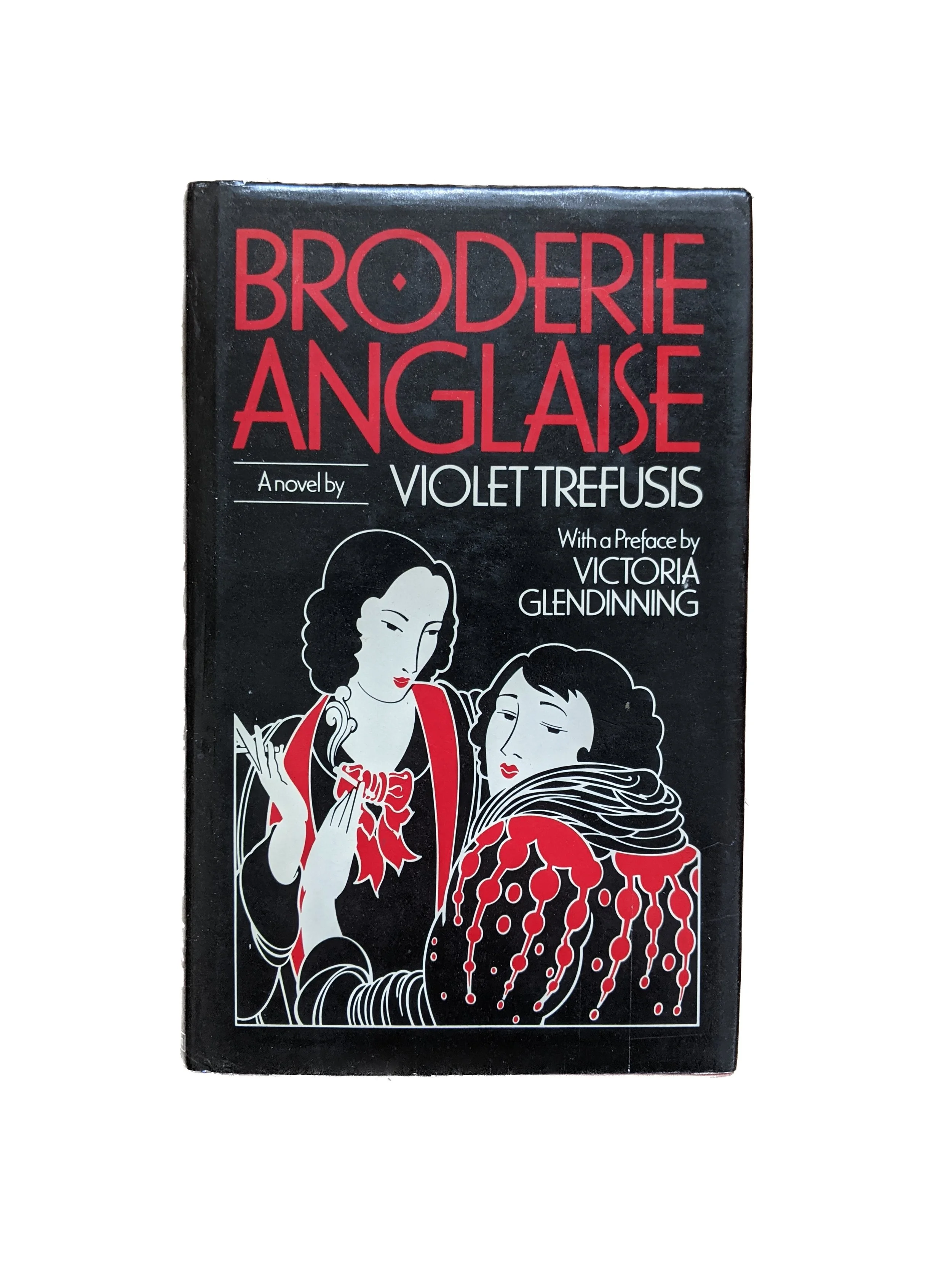
First English language edition hardback. 125pp, last five pages blank. 8vo. This novel by Trefusis dramatises her youthful affair with Vita Sackville-West in an unconventional, comedic manner. Originally published in French in 1935, it was finally translated in the 1980s following the revelation of the affair. This edition features an introduction by Victoria Glendinning, Trefusis’ biographer. Tucked inside the cover of this copy is a postcard from Sissinghurst Castle, with a picture of Vita Sackville-West’s writing room and a list of books related ton Trefusis and Sackville-West written on the back.
Red cloth board with gold text on spine. Dustjacket with striking cover illustration. Dustjacket is very slightly worn in top right corner and top of spine. Near fine.

Quick View
£150.00
London: Hutchinson & Co., 1984. 1st UK edition thus. Large 8vo.
A collection of over 500 letters between the two writers, who were friends, lovers and confidants over a period of some 20 years. Presented in a narrative framework with Woolf’s replies, the collection here is an epistolary memoir which illuminates their fascinating and deeply moving relationship.
Black boards lettered in silver to backstrip with publisher’s device to foot; together in the unclipped black, white and red printed dustwrapper (£12.95 net); pp. [v], 6-473, [vii]; near-fine, a couple of white stains to upper board and lightly compressed to spine tips; upper edge with some red marking; previous owner’s Ex Libris to ffep; the wrapper lightly shelf worn and creased; evidence of a price sticker being removed from the front panel.
![Virginia Woolf: A Biography Vol. 1 by Quentin Bell [Owned by Paula Rego]](https://images.squarespace-cdn.com/content/v1/5e7541426a90d340b980ae06/0ab54dc3-3f6b-420c-bbf9-00485ac349a6/rego.jpeg)
Quick View
£120.00
Bloomsbury: The Hogarth Press, 1972.
8vo., grey boards lettered and lined in gilt to spine; in the unclipped orange, black and white pictorial dustwrapper featuring an image of Woolf to the upper cover; decorative map endpapers; pp. [vi], vii-xiii, [iii], 230, [ii]; with black and white frontis portrait of Woolf and a further 16 pages of plates, as well as a family tree; boards a little sunned at edges; the wrapper with some light marking and creasing, perhaps just touched by sun at the backstrip.
Fifth impression.
The first volume of the biography of Virginia Woolf, commissioned by her husband Leonard shortly before his death in 1969. Bell was Woolf’s nephew, and in order for him to complete the biography, Leonard gave him access to all of her papers, including personal documentation, letters, and the diaries which she kept for the majority of her life. This first volume gives an account of the author’s family history, her childhood, adolescence and first pieces of writing, and this particular copy formerly in the possession of the artist Paula Rego, with her pencilled name to the half title.
![The Grape Vine in England by Edward Hyams [Introduction by V. Sackville-West]](https://images.squarespace-cdn.com/content/v1/5e7541426a90d340b980ae06/7b2ccbec-5066-41c7-aa53-e8d6b513107c/bebebebe.jpeg)
Quick View
£85.00
London: The Bodely Head, 1949. First edition hardback, with introduction by Vita Sackville-West. 208pp, 8vo.
Edward Hyams was an essayist and translator with a passion for gardening. Over his life he produced over ninety books on a variety of topics, though gardening and horticulture was a topic frequently returned to.
Green cloth board with gold design on cover and spine. Spine leaning slightly. Edges of board a little discoloured. Dustjacket worn at edges and especially in bottom left corner. Spine faded from original orange. 1cm open tear to top of back dustjacket, closed tear to bottom.
![Saint Joan of Arc by V. Sackville-West [Vita Sackville-West]](https://images.squarespace-cdn.com/content/v1/5e7541426a90d340b980ae06/d5019c05-bce6-4e37-bfb3-6fd789cf7a0b/joan.jpeg)
Quick View
£40.00
London: Michael Joseph, 1969.
8vo., red publisher’s boards lettered in gilt to spine with publisher’s device to foot; in the unclipped red, black and white dustwrapper (unclipped, £2.50 to front flap) designed by Peter Brooks; pp. [vii], 8-344; with black and white photographic frontis showing Jeanne d’Arc’s birthplace at Domremy; spine a touch rolled and pushed with a little bowing the boards; previous owner’s inscription to ffep; with some spot marks to the upper right hand corner of prelims; the wrapper with some associate spotting and dampstaining; a very good copy.
Second impression of the revised edition, originally published in 1936.
The first full-length biography by Vita Sackville-West, who was at the time living at Sissinghurst Castle and devoting much of her time to historical research. A second biography, Pepita, concerning the author’s grandmother, was also published around this time. Here, Sackville-West provides extensive background on the hundred years war, and insights into medieval French politics, before tracing the life of the Saint from her humble origins as a shepherd girl, to her murder as a heretic and subsequent canonisation in 1920. An elegant and intruiging work.

Quick View
£80.00
Bloomsbury: The Hogarth Press, 1965. First edition, with preface by Jean Guiget. 160pp, 8vo.
Collection of Woolf’s non-fiction writing on her contemporary peers, primarily reviews of books published first in magazines and periodicals.
Brown cloth binding shows only the slightest wear on top edge of spine. In near fine condition. Dust jacket is slightly soiled, but has no other faults. Over all near fine.
Quick View
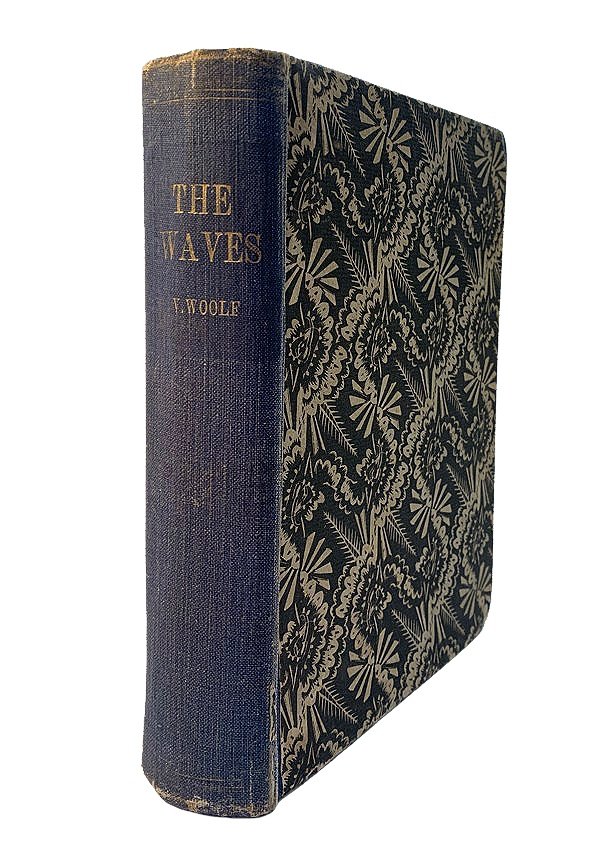
£1,750.00
First edition of Woolf’s The Waves, in a variant binding, usually found in purple cloth. This copy formerly in the possession of Cyril Connolly, with his pencil and ink annotations to the front flyleaves. Two of the annotations are the same, reading “The Waves is a poetic account of people seen through each others minds through all their lives, speaking their thoughts in poetic imagery to each other”. The third annotation praises the book for its celebration of “the dignity of human life and the passage of time. It is one of the books which comes nearest to stating the mystery of life and so, in a sense, nearest to solving it". Connolly’s signature and 1938 date is found beneath.
Cyril Connolly (1903-1974) was an English literary critic and editor of the hugely successful magazine Horizon, which over the course of its printing history ran for 120 issues. The intention of the magazine was to celebrate the emergence of distinguished writers during and after the Second World War, and for “keeping them in touch with their French and American contemporaries—in short, continuing our policy of publishing the best critical and creative writing we can find in wartime England and maintaining the continuity of the present with the past.” Along with Woolf, the magazine published a huge number of writers, including such names as Nancy Cunard, W. H. Auden, Nancy Mitford, T. S. Eliot, Barbara Hepworth, H. G. Wells, Vita Sackville-West, and numerous others.
Initially, Connolly and Woolf had taken an instant dislike to each other. In a 1956 letter from V. S. Pritchett, the writer recalls Connolly as saying “I disliked her. She asked embarrassing questions”. The feelings were certainly reciprocated. In her diaries, Woolf wrote of the ‘baboon’: “'I do not like that smarty-boots Connolly." Their mutual opinions of one another, however, did not prevent them from appreciating the other’s work, and this copy is a personal documentation of how considerate he was of its import.
Widely regarded as Woolf’s most experimental work, the novel follows six narrators through their lives, interweaving their respective stories through a series of monologues from childhood to adulthood. Each character bears resemblance to Woolf’s real-life friends and acquaintances, with inspirations taken from such characters as E. M. Forster, T. S. Eliot, Lytton Strachey, Mary Hutchinson and Vanessa Bell, as well as Woolf herself, and her brother Thoby Stephen.
Upon her death in 1941, the final words of ‘The Waves’ were engraved on the author’s tombstone: “Against you I will fling myself, unvanquished and unyielding, O Death! The Waves broke on the shore. ”
8vo., blue cloth boards, overlaid with paste paper to front and rear covers (we found a green variant of the paper on a Sylvia Townsend Warner title published by Chatto & Windus); lettered in gilt to backstrip; pp. [iv], 5-324, [iv]; boards rather rubbed, particularly at edges, with cloth corners showing through to boards; pushed at spine tips and corners, with some loss of colour to the cloth and paste paper to the edges of boards; slight shelf lean; internally a little spotted, sporadically throughout, but predominantly to the prelims and endpapers; a bit loved, but still a good to very good copy.
Quick View
£50.00
London: Constable, 1981. First edition hardback. 205pp, last page bllank. 8vo.
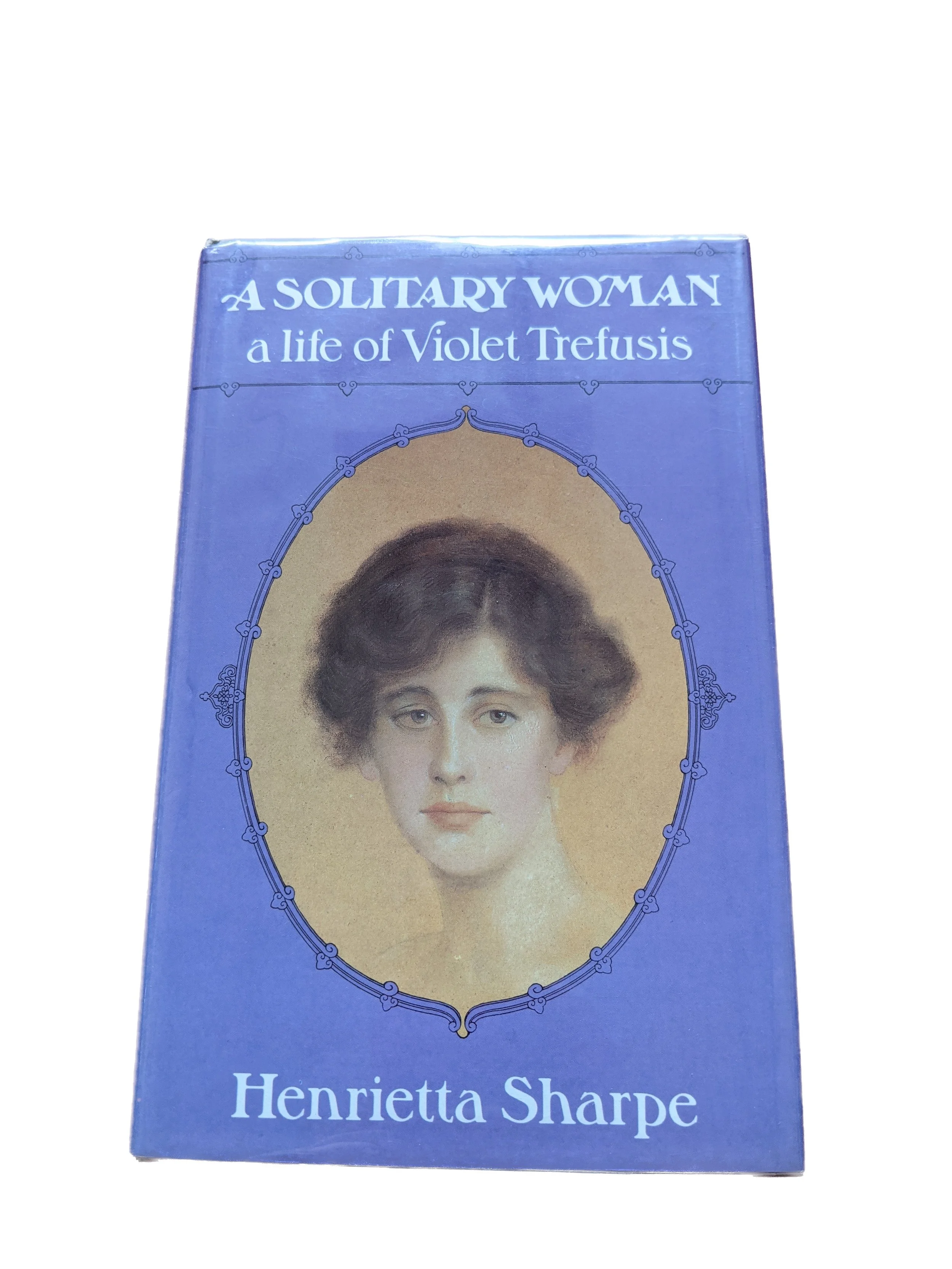
Biography of novelist and socialite Violet Trefusis, written in the aftermath of revelations about her personal life in the 1970s - namely that she had a lengthy affair with Vita Sackville-West, which was put to a halt after her parents forced her to marry a cavalry officer.
Grey cloth board with gold text on spine. Dustjacket like new, showing a portrait of younger Trefusis on the front and a picture of an older Trefusis on the back. A number of black and white photographs throughout.
![Nursery Rhymes, An Essay by V. Sackville West [Vita Sackville-West]](https://images.squarespace-cdn.com/content/v1/5e7541426a90d340b980ae06/64c6821e-06ab-4e73-972e-7a38ca5a1290/bebebe.jpeg)
Sold out
Quick View
£30.00
London: Michael Joseph, 1950.
First edition thus. Hardcover. 73pp, last three oages blank. 8vo.
Illustrated edition of Sackville-West’s essay on the nursery rhyme and what it might reveal about English history. Illustrated by Phillipe Julian.
Yellow cloth board with red text design on cover and spine. Lean to spine. 2cm closed tear to dustjacket. Open tear to dustjacket spine at the top. Chip to back of dustjacket. Toning to endpapers from dustjacket. Owner inscription to front endpapers.
![Nursery Rhymes [Limited Edition] by V. Sackville-West [Vita Sackville-West]](https://images.squarespace-cdn.com/content/v1/5e7541426a90d340b980ae06/def8f224-012e-4cd7-ae08-899d133c4262/PXL_20250611_111311207+Background+Removed.jpeg)
Quick View
£120.00
London: The Dropmore Press, 1947.
Large 8vo., blue cloth embossed with device in gilt to upper board; lettered in gilt to backstrip with rules in blind to head and foot; with decorative gilt turn-ins; title page in pink and black; with pink initial letter to p. [vii]; in both the original wrapper, duplicating the cover design and printed in blue on textured paper; and in the card slipcase (as often, missing the backstrip); outer edges untrimmed; pp. [vii], 2-66, [iv]; a lovely, clean copy; lightly compressed to spine ends; previous evidence of owner’s inscriptions removed from ffep; the jacket clean and bright, slightly darkened and creased to folds and spine with a couple of small spots to lower panel and some nicking and chipping to spine tips; the slipcase lightly browned, spotted, and bumped at corners, has done an excellent job of preserving the book and jacket beneath.
First, limited edition, number 68 of 550 copies printed. The fourth book in a series entitled the ‘Dropmore Essays’, printed by hand press on paper handmade by Portals of Whitechurch and bound by Evans of Croydon. The book is dedicated to ‘Anna’ (Macmillan), the author’s secretary and lover.
A humorous essays on the origins and nature of nursery rhymes, in which the author argues for the historical and contextual importance of childhood verses. “Coleridge had a proper appreciation of the preposterous, astounding, yet entirely acceptable propositions which go to make up the thaumaturgy of the nursery” she begins. “No one lacking that appreciation is advised to read any further in this essay.” Over the course of some 66 pages, Sackville-West delves into antiquarian explanations concerning the origins of nursery rhymes, sometimes poking fun at their supposed significance.
As one review puts it, "Miss Sackville-West's inquiry is often conjectural but always entertaining, and she knows the magic that sometimes brings the nonsense of the nursery song near to pure poetry". (Manchester Guardian, 28 October 1947).
A lovely copy of an increasingly scarce work, later published in a trade edition with illustrations by Philippe Jullian.
![Stranger in the House by Lisa Tuttle [Signed Limited Edition]](https://images.squarespace-cdn.com/content/v1/5e7541426a90d340b980ae06/1f70179c-8a40-4992-ba5f-9d4e18bd4e2b/9653+%281%29.jpeg)
Quick View
£170.00
Ashcroft: Ash Tree Press, 2010.
Signed limited edition hardback, limited to 400 copies. 255pp, last two pages blank, 8vo. Introduction by legendary anthologist Stephen Jones.
Planned as Volume One of a two-part collection of Tuttle’s ghost and horror stories by specialist publisher Ash Tree Press, although Volume Two has not appeared. Collected here is every piece of ‘supernatural’ short fiction by the author from 1972 to 1985, including almost every story from her classic collection A Nest of Nightmares. Highlights of this remarkable run of stories include Dollburger, The Horse Lord and The Other Mother, which has an nightmarish opening sentence and only gets better from there: “Across the lake, on the other shore, something moved: pale-white, glimmering. Tall as a person.”
Striking glossy dustjacket with illustration by Jason Zerillo. Maroon cloth board with gilt silver lettering on spine. Like new.
![The Ladies of Grace Adieu [ARC pamphlet]](https://images.squarespace-cdn.com/content/v1/5e7541426a90d340b980ae06/e5386e23-b848-46a8-b325-30fa1d6ba5a6/9638+%282%29.jpeg)
Sold out
Quick View
£60.00
London: Bloomsbury, 2006.
Uncorrected promotional pamphlet, including postcard. Numbered 81 of 1100. 50pp, 8vo. Illustrated by Charles Vess.
Containing an in-fiction introduction by “Professor James Sutherland” and the title story from the full collection, this short limited edition teaser was sent to readers ahead of the publication of Clarke’s follow-up to her modern classic Jonathan Strange and Mr Norrell. The illustrated postcard included with this book invites the reader to “Return to the world of English magic” that was introduced in that earlier novel.
Bottom corner of back cover has corrected bend. Cover and back cover are a scan of the final book’s clothbound edition. This is a scarce curio in near fine condition.
![Gabriel by Lisa Tuttle [Signed]](https://images.squarespace-cdn.com/content/v1/5e7541426a90d340b980ae06/bf6a510e-4b39-4b48-ba65-6dfa82bebc62/9628+%281%29.jpeg)
Quick View
£80.00
London: Severn House, 1987.
Signed first edition hardback. 218pp, last three pages blank.
After making an impression on the genre scene with horror books A Nest of Nightmares and Familiar Spirit, as well as her George R. R. Martin collaboration Windhaven, Tuttle wrote this slim, deeply eerie novel following a young woman who becomes convinced that her deceased husband has returned to her in the form of a small boy named Ben. An unconventional ghost story, Gabriel is of a piece with Tuttle’s later short novels such as The Pillow Friend and My Death; utilising the horror form to plumb the depths of the female psyche. From the opening page: “His name was Gabriel Archer, and he was my husband for eleven months. He died at twenty-three, a few days before my nineteenth birthday. Ten years later, on my twenty-ninth birthday, he came back to haunt me.”
Dustjacket has slight wear to some corners and edges. Black cloth board with gold lettering to spine. Bottom right corner of top of board slightly bent inwards. Author signature on title page. Near fine.
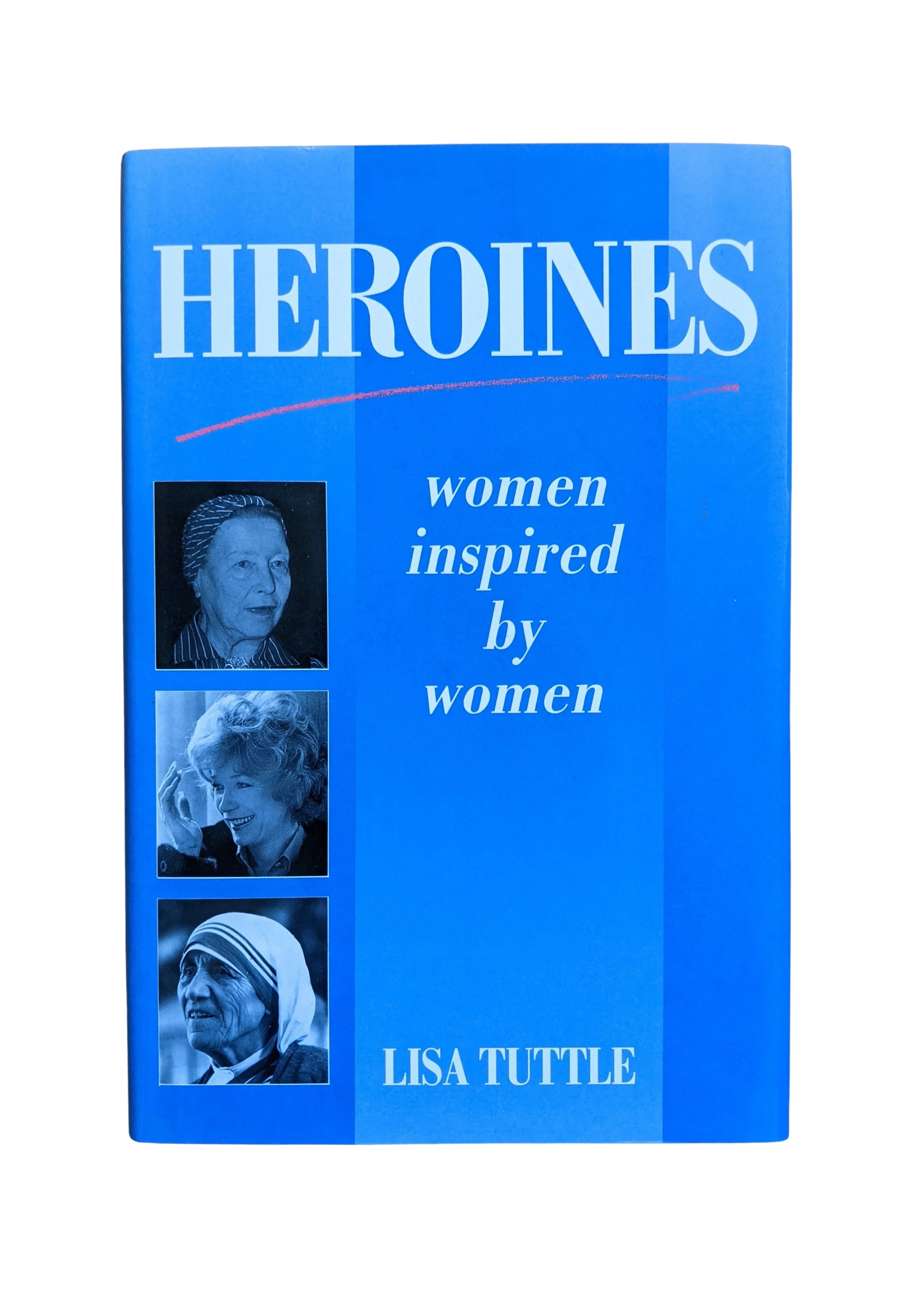
Quick View
£100.00
London: Harrap, 1988.
First edition hardback, signed by Lisa Tuttle. 224pp, last eight pages blank, 8vo.
Book of interviews introduced and curated by feminist genre author Lisa Tuttle, featuring interviews with a range of influential feminist figures from the 1980s including novelist Elizabeth Jane Howard, actress Judi Dench, Second World War nursing volunteer Sue Ryder and controversial writer Germaine Greer. Tuttle interviews each figure about the women who inspired them, making this a useful chronicle of late-80s feminist thinking. Dench discusses being taught acting at a Quaker school as a girl by Kay Macdonald/Joy Harvey, and Elizabeth Jane Howard talks about silent film star Lady Diana Cooper.
Blue dustjacket with the black and white photographs of some of the ‘heroines’ mentioned by interview subject. Red cloth board and gold lettering on spine. Like new.
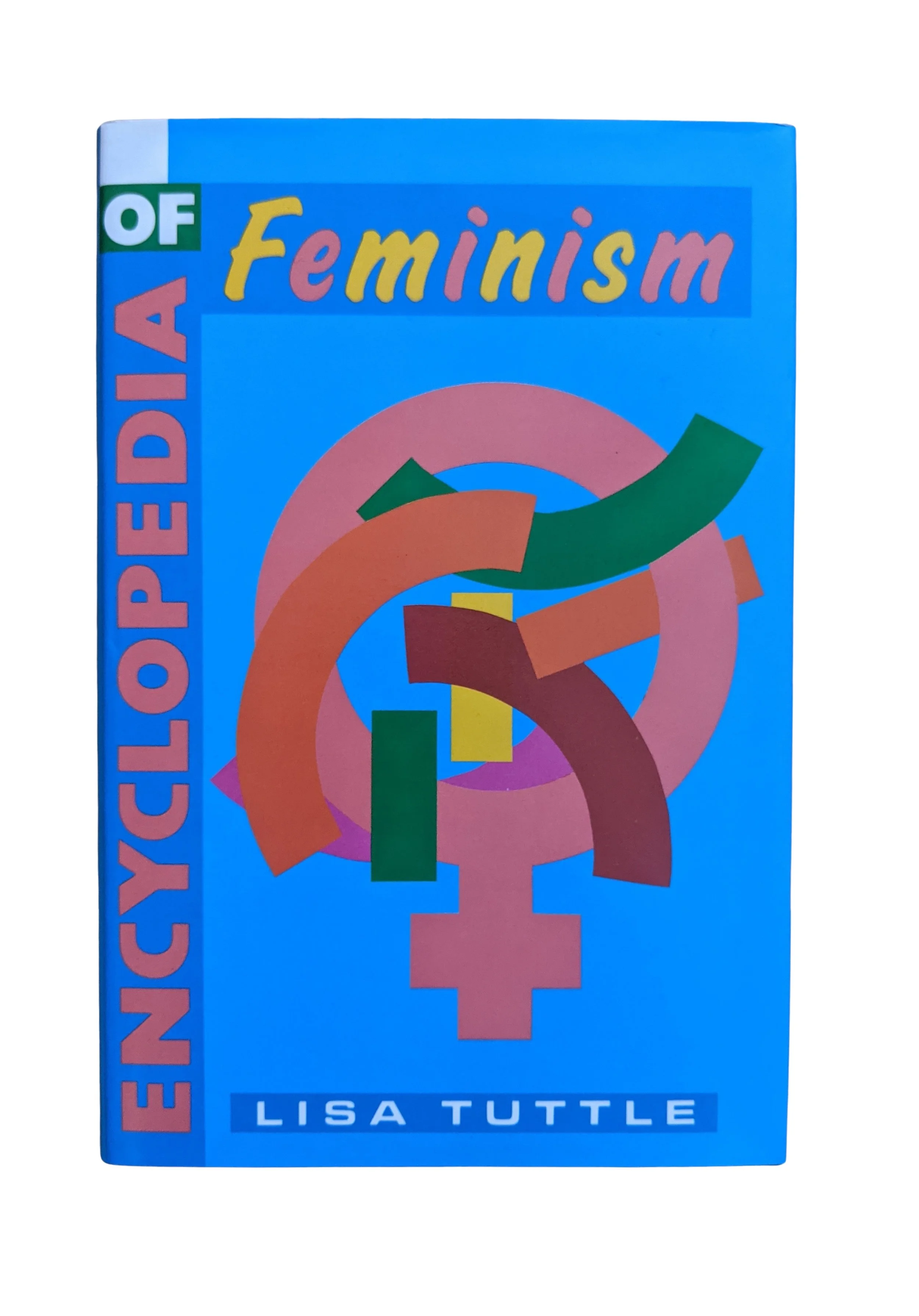
Quick View
£15.00
Harlow: Longman, 1986.
First edition hardback. 401pp, final 2 pages blank, 8vo.
An A-Z of feminism from the mid-1980s, featuring notable names and terms with encyclopaedic entries for each item. In her introduction, Tuttle states the intention behind this book: “I believe there is a need for a general reference work, accessible to both the committed feminist and the pre-feminist reader alike.” The book is, of course, from a very particular perspective of 1980s feminism; this both makes this a fascinating reference point for a past-era of feminist thinking (the encyclopedia entry for “transexualism,” for example, cites notoriously transphobic Janice Raymond as an authority and mentions that “it is a subject which makes most feminists uneasy”). But this book should be taken as what it is - a portrait of a movement at a certain time.
Vibrant blue dustjacket. Dark blue cloth board with gold lettering on spine. Like new.
![Gabriel by Lisa Tuttle [Signed Limited Edition]](https://images.squarespace-cdn.com/content/v1/5e7541426a90d340b980ae06/b7e95215-df83-4c7f-9036-3c15cdadb7e7/9628+%282%29.jpeg)
Sold out
Quick View
£100.00
London: Severn House, 1987.
Signed, limited edition first UK edition hardback. Numbered 5 of 50. 218pp, last three pages blank, 8vo.
Front endpiece reads “This is one of a special limited edition of fifty copies only, produced exclusively for the Andromeda Bookshop”. After making an impression on the genre scene with horror books A Nest of Nightmares and Familiar Spirit, as well as her George R. R. Martin collaboration Windhaven, Tuttle wrote this slim, deeply eerie novel following a young woman who becomes convinced that her deceased husband has returned to her in the form of a small boy named Ben. An unconventional ghost story, Gabriel is of a piece with Tuttle’s later short novels such as The Pillow Friend and My Death; utilising the horror form to plumb the depths of the female psyche. From the opening page: “His name was Gabriel Archer, and he was my husband for eleven months. He died at twenty-three, a few days before my nineteenth birthday. Ten years later, on my twenty-ninth birthday, he came back to haunt me.”
Glossy dustjacket features a colour illustration on the cover and a short list of “Further Horror Fiction From Severn House” on the back. Back of dustjacket has some light scratches. Blue leather binding, specific to this limited edition, with gold lettering on spine. A fine copy.
![Ghosts & Other Lovers by Lisa Tuttle [Deluxe Edition]](https://images.squarespace-cdn.com/content/v1/5e7541426a90d340b980ae06/a63bf653-644d-41bc-8dec-6a667f1ef568/9627.jpeg)
Sold out
Quick View
£150.00
Wales: Sarob Press, 2002.
‘Deluxe’ edition limited to 52 signed by the author, this copy number 8. Includes handsome black slipcase. 152pp, last five pages blank, 8vo.
Cover and interior feature illustrations by prolific ghost story artist Paul Lowe. The cover illustration is for the short story Mr. Elphinstone’s Hands, one of the highlights of this collection - a story of a Victorian girl gifted (or cursed) with a poison touch. The stories that appear here were all written during the 1980s and 1990s and are excellent examples of the form, walking a line between contemporary anxieties and classical stylings. Tuttle describes, in the collection’s blurb, these as “stories about strange relationships with ghosts, with lovers, and with ghostly lovers,” and in the introduction she directly cites her influences: Shirley Jackson, Robert Aickman, M.R. James. Other tales collected here include Manskin, Womanskin, Haunts and The Walled Garden.
Slipcase is black cloth. Glossy dustjacket features full illustration. Shiny black cloth board with silver lettering on spine. Copy number and author signature on special inset title page. Scarce. Like new.

Quick View
£5,750.00
Cuckoo Press. London. 2015. Bound in collaboration with Black Fox Bindery. Limited edition, signed by the author as Elena Ferrante to the limitation page (there were also 26 leather bound copies issued simultaneously, lettered A-Z). This no. #34 of 100 signed and numbered copies.
The first volume in the globally-bestselling quartet known as The Neapolitan Novels, “My Brilliant Friend” begins with the complex and poetic account of the lives of two vibrant young women, Lila and Lenu. What starts as one woman’s attempted memoir of her friendship blossoms and expands into an examination of childhood friendship, love, loss, ambition and the intense and often traumatic complexities of navigating life as a woman.
Critically acclaimed, beautiful, violent, and mysterious by turns, the novel and its author have both been the source of controversy, not least because of Elena Ferrante’s insistence upon keeping her true identity a guarded secret. The author’s belief that, once written, stories no longer need their authors, coupled with her refusal to be concretely identified and insistence that she be able to write upon her own terms has aroused the ire and spite of a number of critics and journalists in her native Italy. Her decision to remain anonymous has even brought sexist arguments from male critics, that the secrecy surrounding her authorship is due to the fact that she must, in fact, be a man (a woman couldn’t possibly pen novels such as these).
The hunt for her “real” identity has several times breached the boundaries of decency and privacy, and continues to prove the point that there is nothing the literary world dislikes more than a woman who both excels in her art, and refuses to conform to what others belief an artist should be. This signed limited edition was produced by the small press publishing arm of the distinguished London firm John Sandoe Books (with some of their promotional material laid in at the front) and bound by a woman-owned book bindery. They remain completely close-mouthed as to how they persuaded the intensely private Ferrante to sign these 126 copies, but they are nevertheless the only books that Ferrante has officially signed. Deliberately, transcendently, rare and elusive.
8vo., publisher’s dark blue silk moire, spine titled in gilt, over geometrically decorated blue Chiyogami paper covered boards in gilt red and light blue, with an onlaid paper title label to front board, in a tailor made blue cloth slipcase; red endpapers; pp. [xiv], xiii-xv, [iv], 4-315, [vii]; with title page in red and black, and limitation notes behind mounted tissue; a fine copy of a beautifully-produced volume, internally clean, with a couple of small red marks to the foot of the slipcase.

Quick View
£140.00
Boston: Houghton Mifflin and Company, 1881.
First edition of Jewett’s third published short story collection, and her fourth book overall, purportedly printed in a run of 2000 copies. The volume is dedicated: “To T. H. J., my dear father; my dear friend; the best and wisest man I ever knew ; who taught me many lessons and showed me many things as we went together along the Country By- Ways.”
Jewett’s father was doctor specialising in obstetrics, and the young Sarah would often accompany him on his daily rounds. As such, she became well acquainted with the women in her local area. She would also take frequent walks, on the recommendation of her father and as a treatment for the rheumatoid arthritis, a condition she had developed in early childhood. Through both of these activities, Jewett developed a love of the natural world, and began writing vignettes of country life that reflect a contemporary interest in ‘local colour’ as opposed to a focus on plot.
The eight short stories include titles such as "River Driftwood," "Andrew's Fortune" and "Miss Becky's Pilgrimage."
4to., brown cloth over bevelled boards; upper board titled in gilt with author’s initialled emblem in gilt to lower edge; spine lettered and ruled in gilt; brown coated endpapers; upper edge gilt pp. [x], 249, [iii]; with title in red and black and headpieces/ initials to begin each chapter; a very good copy, boards a little rubbed, particularly to the pushed spine ends and corners; small split to rear free endpaper; a lovely copy.
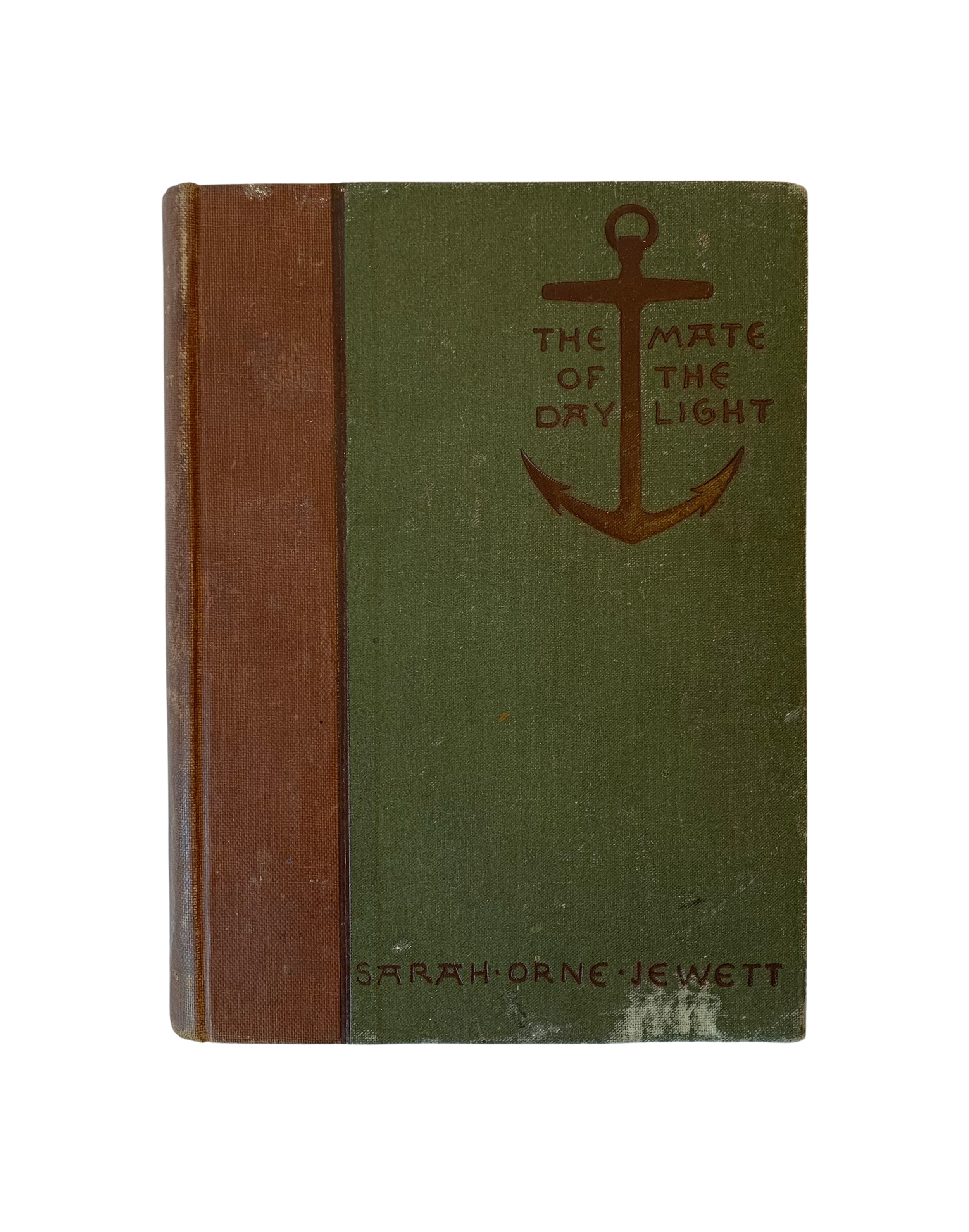
Quick View
£150.00
Boston: Houghton Mifflin and Company, 1884.
First edition, one of 1500 copies printed.
A collection of short stories dedicated to ‘A. F.’, A.K.A. Annie Fields, Jewett’s life long lover and end of life partner. The pair became close at the beginning of the 1880s after the death of Fields’s husband, and entered into what was known at the time as a ‘Boston Marriage’, exchanging rings and vows and committing to one another for the remainder of their lives together. After Jewett’s death in 1909, Fields published their letters in a volume of correspondence, in a public display of defiance against so-called ‘traditional’ values.
A standout story in this collection, ‘Tom’s Husband’ also investigates gender roles and traditional values of the married main characters, Tom and Mary Wilson. Tom is ill suited to the jobs society usually ascribed to a husband, while Mary is aces at them. Her father states ‘it had been a mistake that she was a girl instead of a boy. Such executive ability as hers is often wasted in the more contracted sphere of women and is apt to be more a disadvantage than a help. She was too independent and self-reliant for a wife; it would seem at first thought.’
Small 4to., two-tone brown and green cloth, lettered and ruled in burgundy to upper board, with anchor device to upper right hand corner; lettered in gilt along spine; title page in red and black; pp. [viii], 254, [ii]; coated grey endpapers removed to front portion, with evidence remaining to front gutter; previous ownership name erased from front free endpaper; a couple of small stains and corner creases throughout; perhaps a tad loose in the binding which is lightly scuffed, with a little loss of colour to the cloth and some light stains/scratches; a very uptogether copy, nonetheless.
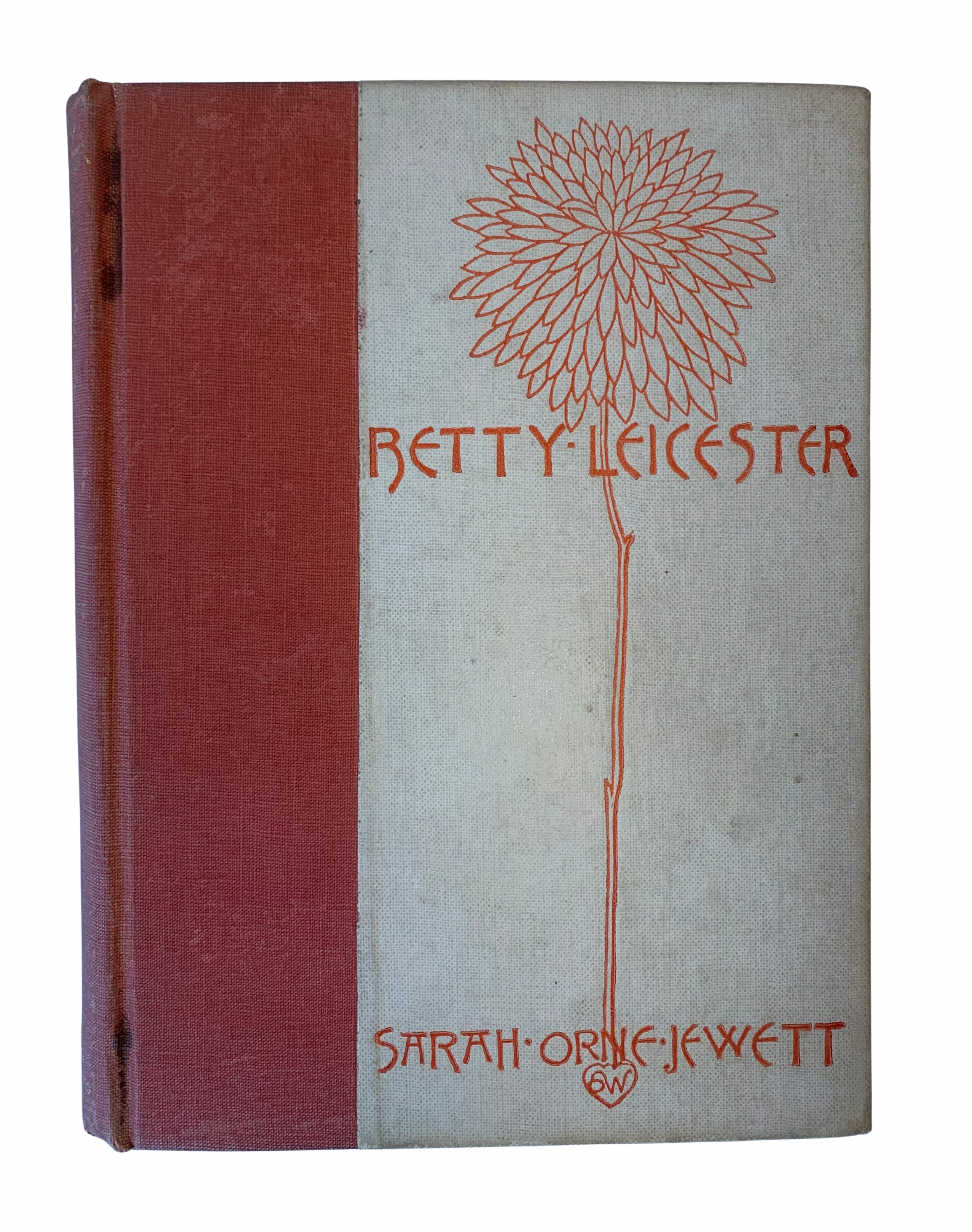
Quick View
£200.00
Boston and New York: Houghton Mifflin and Company, 1890.
First edition of Jewett’s novel concerning a young woman coming back to rural life in America after living abroad. 15 year old Betty Leicester elects to stay with her aunts Barbara and Mary in their New England home while her father is travelling in Alaska. True to form, Jewett describes the rolling countryside and wild Atlantic coast contrasting with the poor social conditions of the aunt’s home village. Jewett intentionally directed the story to young women and girls, writing in an accessible style in this coming-of-age tale.
A charming book, in pocket format designed to be carried and read - perhaps outdoors.
Small 4to., two-tone red and cream cloth, prettily lettered and blocked in red to upper board with the print of a Chrysanthemum to the upper cover; lettered and decorated in a similar fashion gilt to spine; upper edge gilt; pp. [xi], 2-287, [iii]; a very good copy, with some light staining and shelf wear to boards; a couple of darker stains along the spine; internally evenly toned with the odd spot and finger mark; but a very uptogether copy overall.
Featured
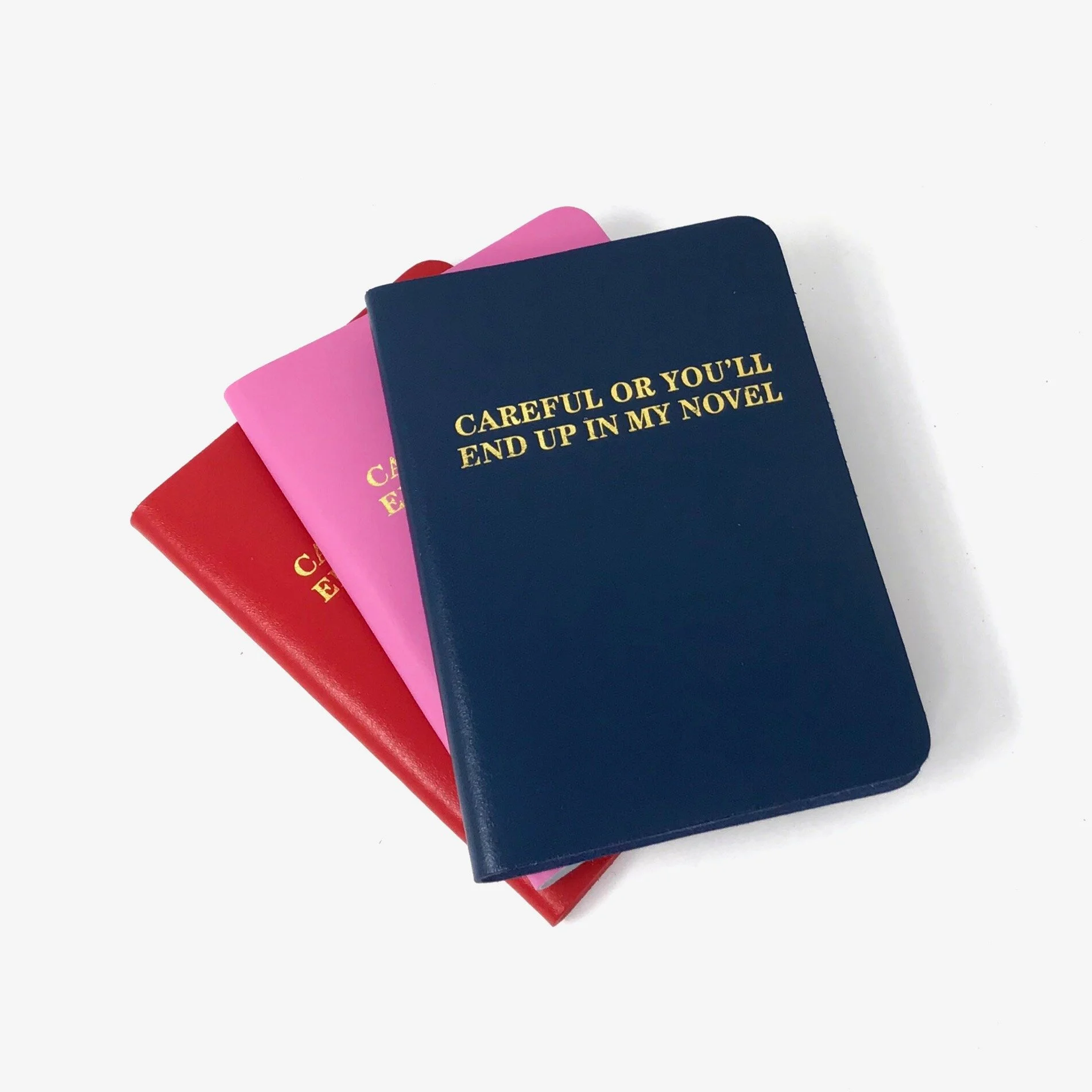
Sale Price:£12.75 Original Price:£16.99
Nothing like a notebook with a threat to write in and display pointedly. Unlined journal bound in genuine leather. Size A5. Made in Scotland.
Red, pink, and blue available.
Price includes VAT
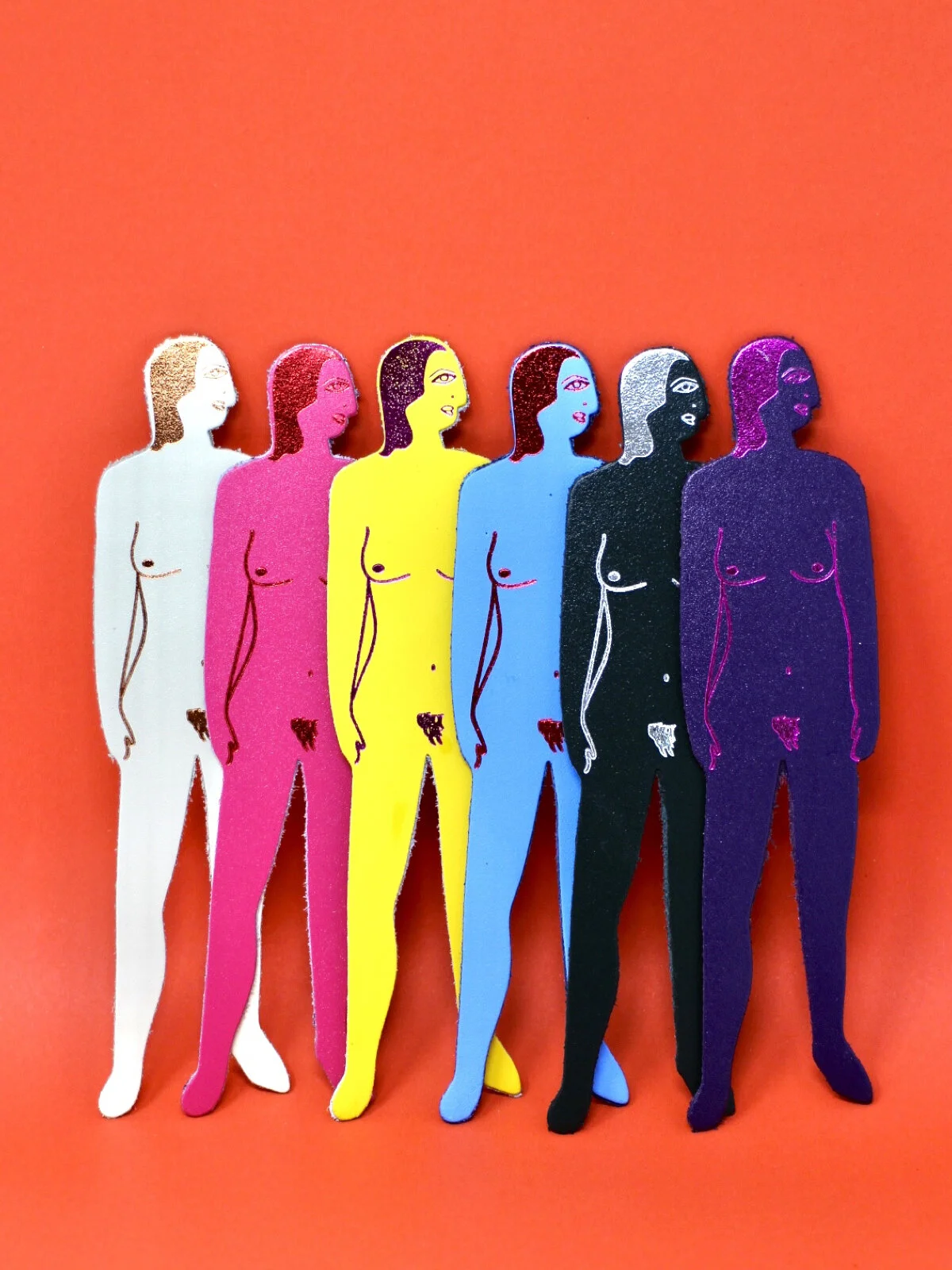
Sale Price:£8.25 Original Price:£11.00
Naked femme bookmarks! One side nude, one side tattooed. Leather. Height 20cm. Made in Scotland.
Colour selection random. If you have a strong preference let us know a first and second choice when you check out and we will do our best to match it.
Price includes VAT

Sale Price:£2.85 Original Price:£3.80
Glitter Boob blank card made on recycled card and hand embellished with biodegradable glitter. Comes with red envelope. 10.4 x 7.3 cm. Made in Scotland.. A bestseller in our Soho store!
Colour selection random. If you have a strong preference let us know when you check out and we will do our best to match it.

Sale Price:£12.00 Original Price:£16.00
Made in small batches, and handcrafted in East London by Studio Nelle, these bookmarks are embossed with a unique illustration of the African Punu mask. With its origins in Gabon, West Africa, the Punu mask is a celebration of non-western beauty standards and the inspiration behind Picasso and Matisse's works of art. Reclaimed leather sourced from local leather merchants. In Ox Red, Brown, Black, Pink and Purple. (W)3.5cm x (H)10.5cm
Price includes VAT
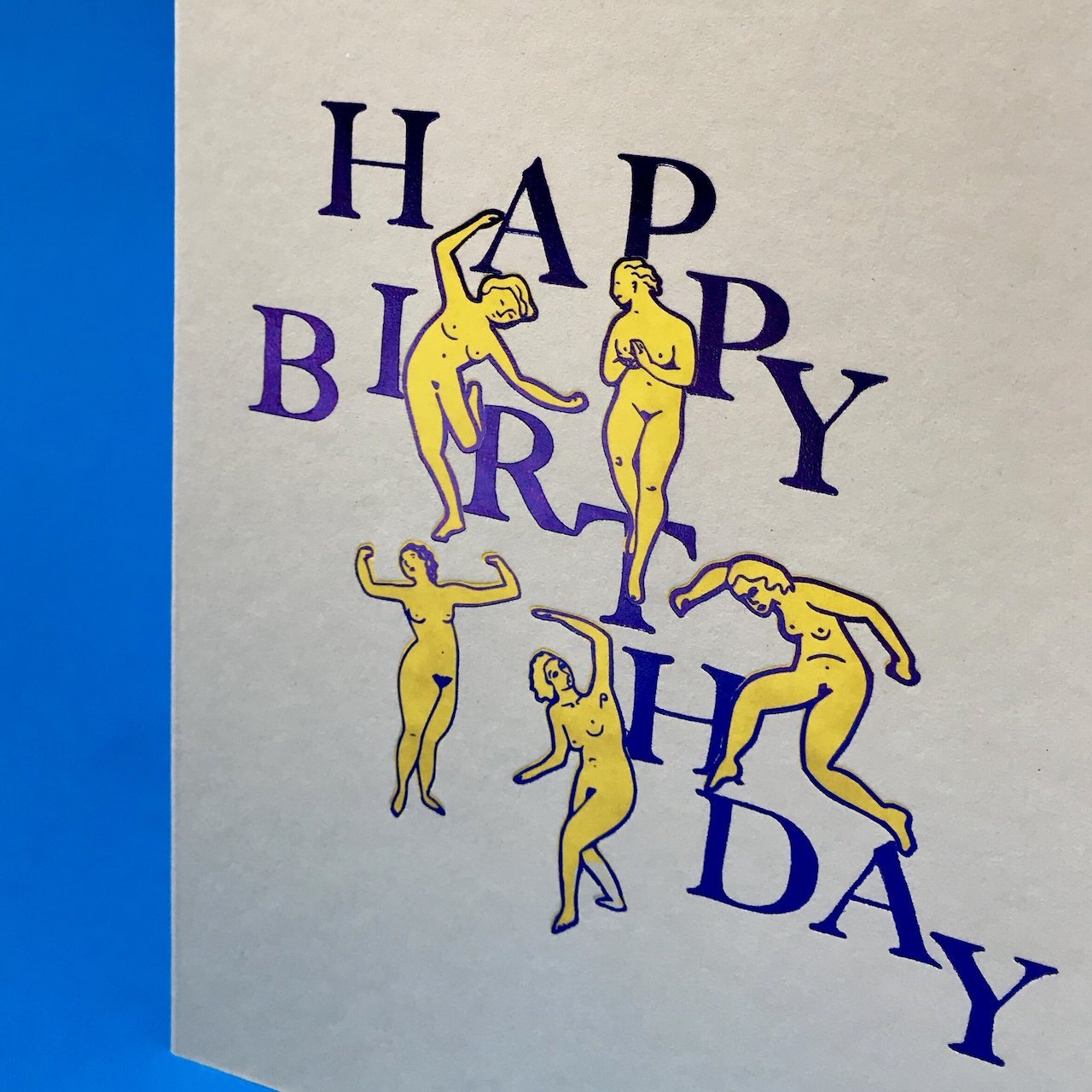
Sale Price:£3.75 Original Price:£5.00
Every birthday should be celebrated with mirthful romping naked people! Made on recycled A6 sized card. Foil embossed. Complete with red envelope. 14.7 x 10.5 cm.
Colour selection random. If you have a strong preference let us know a first and second choice when you check out and we will do our best to match it.
Price includes VAT.
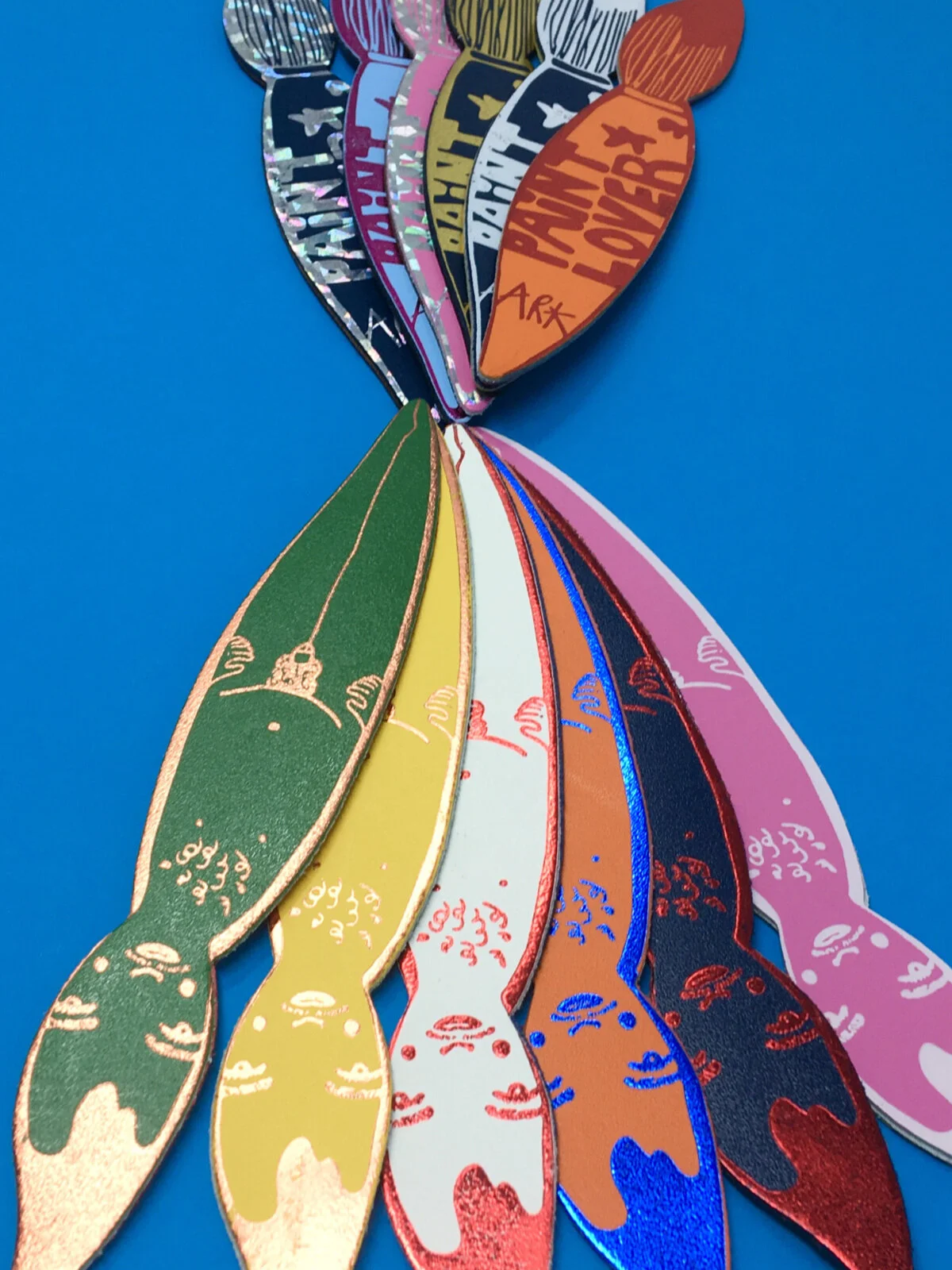
Sale Price:£8.25 Original Price:£11.00
A naked punk paintbrush bookmark for the artists in your life. Double-sided leather. Height 20cm. Made in Scotland.
Colour selection random. If you have a strong preference let us know a first and second choice when you check out and we will do our best to match it.
Price includes VAT
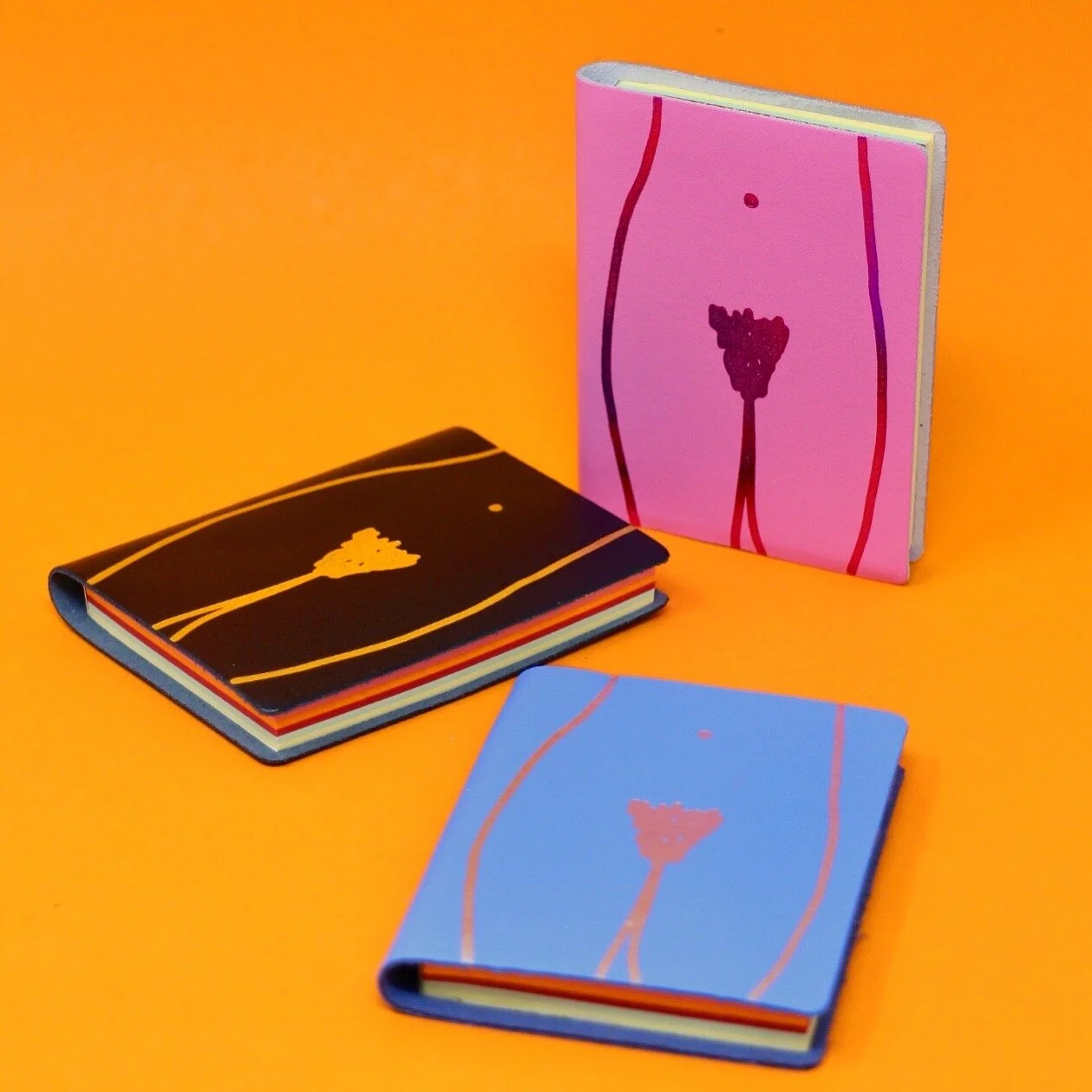
Sale Price:£10.50 Original Price:£14.00
A sparkly bits-covered notebook with unlined rainbow paper. Leather. 9.8 x 7.5cm. Gold embossed. Made in Scotland.
Pink available.

Sale Price:£16.80 Original Price:£22.40
Cause a great spectacle with your embossed cat’s eyes printed spectacles case. Leather pinch-to-open glasses case.
Pink only.
Price includes VAT

Sale Price:£2.85 Original Price:£3.80
A shiny faced card for a glowing message. Made on recycled card and hand embellished with bio degradable glitter. Comes with red envelope. 10.4 x 7.3 cm. Made in Scotland. A bestseller in our Soho store!
Colour selection random. If you have a strong preference let us know when you check out and we will do our best to match it.

Sale Price:£2.85 Original Price:£3.80
Fringe! Bangs! A mood! Made on recycled card and hand embellished with bio degradable glitter. Comes with red envelope. 10.4 x 7.3 cm. Made in Scotland.
Colour selection random. If you have a strong preference let us know when you check out and we will do our best to match it.
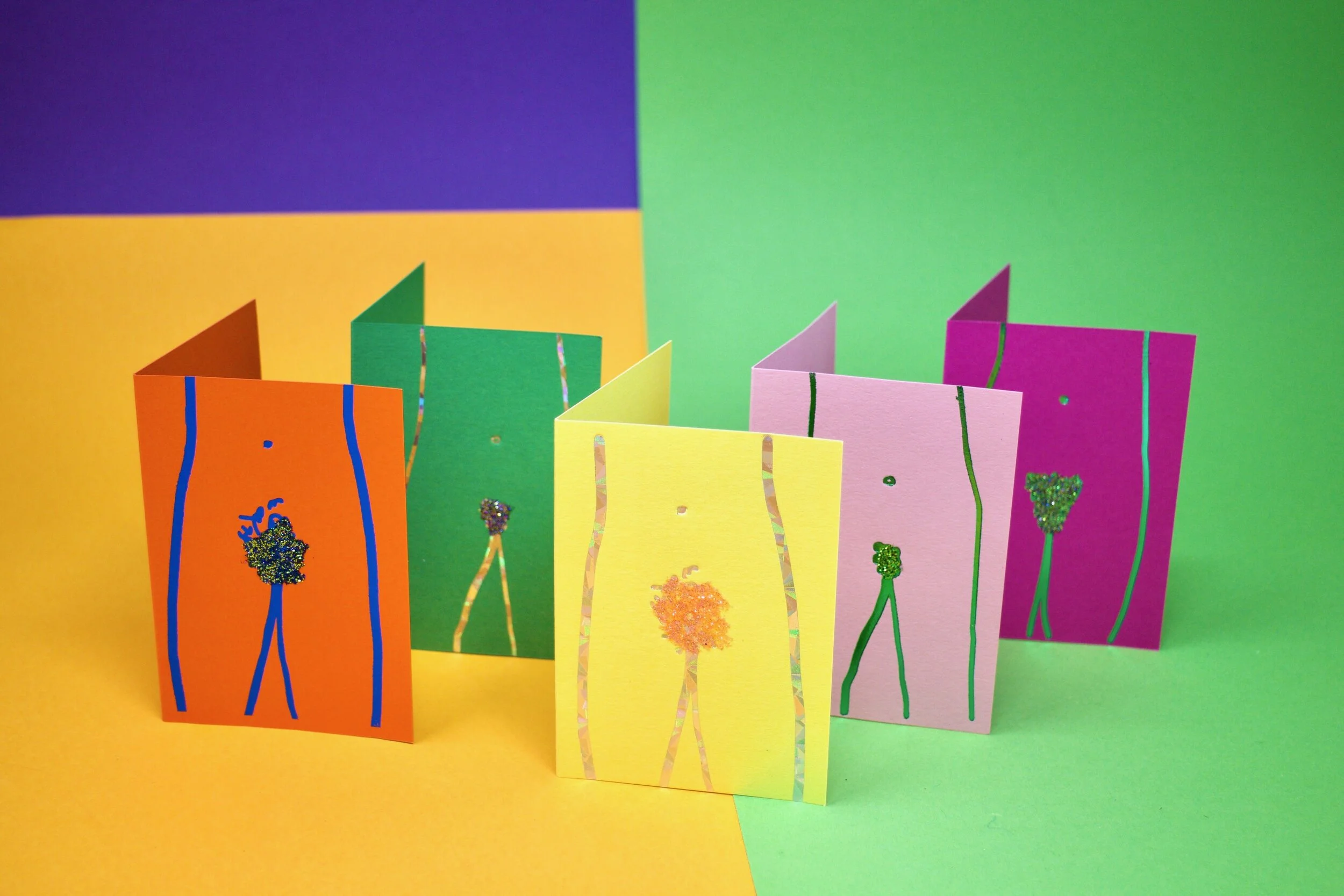
Sale Price:£2.85 Original Price:£3.80
A glittery bits blank card! Made on recycled card. Comes with red envelope. 10.4 x 7.3 cm. Made in Scotland. A bestseller in our Soho store!
Colour selection random. If you have a strong preference let us know a first and second choice when you check out and we will do our best to match it.
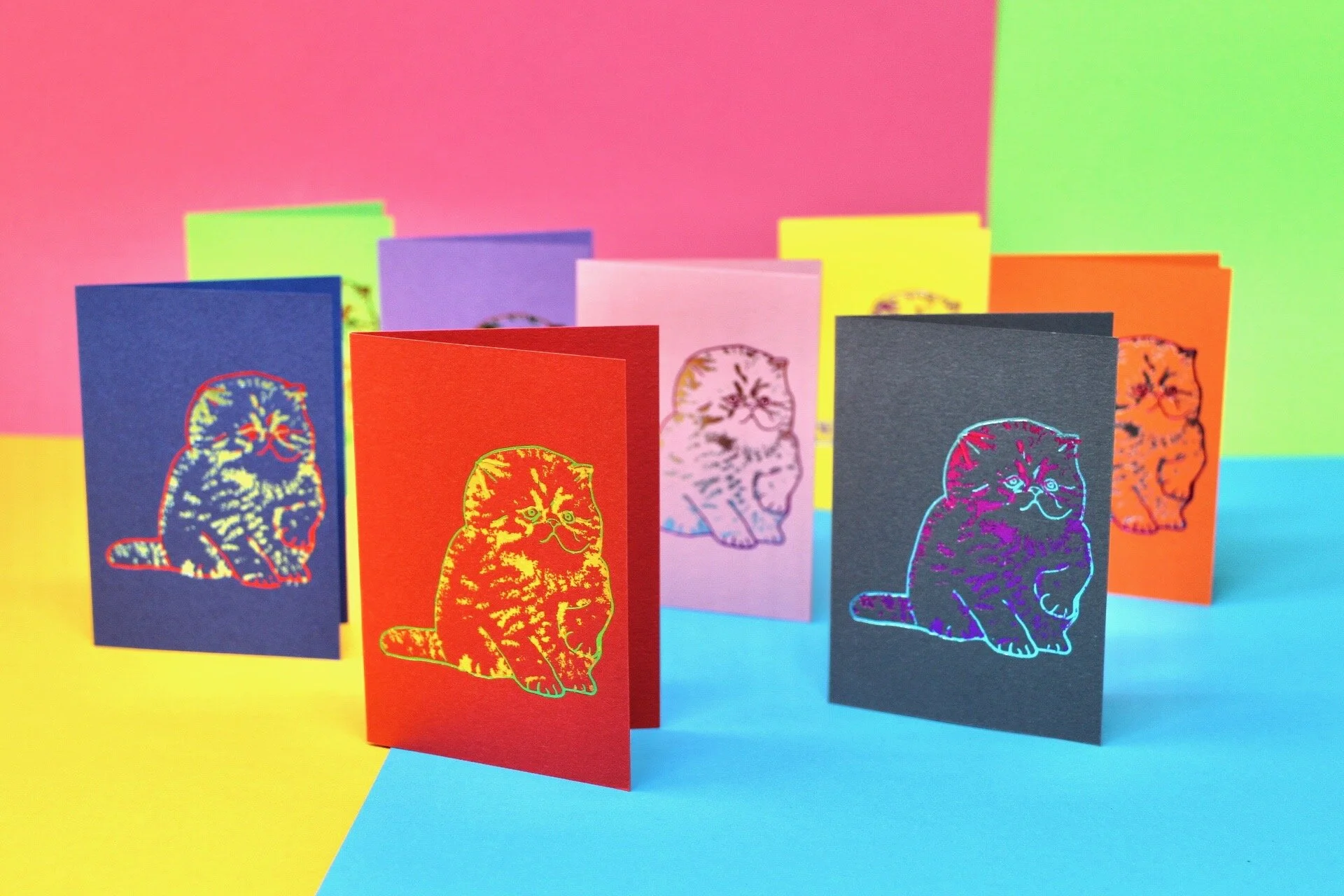
Sale Price:£2.85 Original Price:£3.80
A kitten card for a cat lover. Made on recycled card. Comes with red envelope. 10.4 x 7.3 cm. Made in Scotland. A bestseller in our Soho store.
Colour selection random. If you have a strong preference let us know a first and second choice when you check out and we will do our best to match it.

Sale Price:£2.85 Original Price:£3.80
Fuzzy bits blank Card. Made on recycled card, foil embossed and embellished with natural wool. Comes with red envelope. 10.4 x 7.3 cm. Made in Scotland.
Colour selection random. If you have a strong preference let us know when you check out and we will do our best to match it.

Sale Price:£2.85 Original Price:£3.80
A Thumb’s Up Card for a positive message. Made on recycled card and hand embellished with bio degradable glitter. Comes with red envelope. 10.4 x 7.3 cm. Made in Scotland.
Colour selection random. If you have a strong preference let us know when you check out and we will do our best to match it.
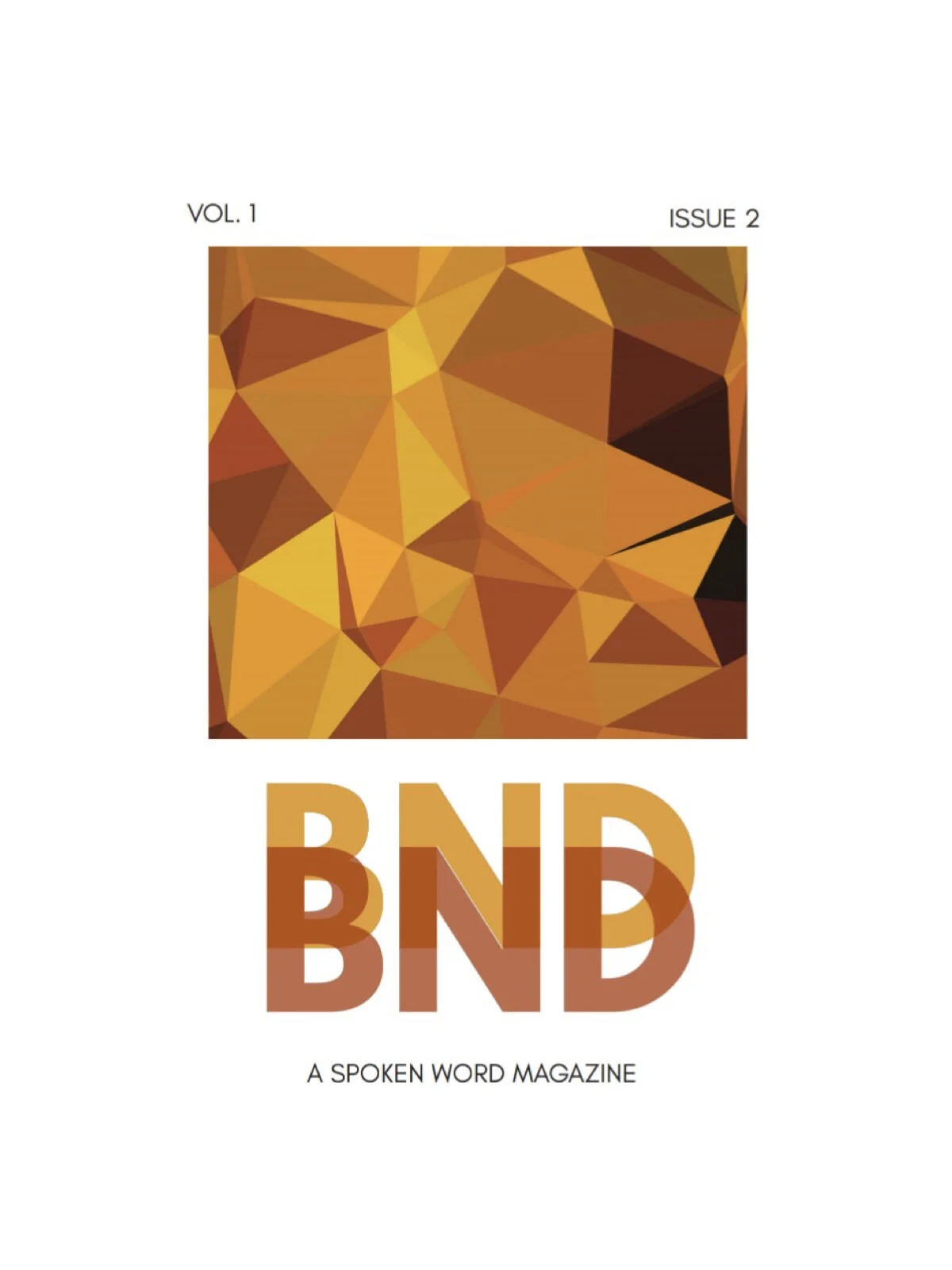
Sale Price:£5.60 Original Price:£7.50
BND is a spoken word magazine that documents the Irish spoken word scene as it exists and evolves, cultivating content with the help of contributors from around the country who wish to write about the community whether it be essays, articles, reviews, and interviews.
HIGHLIGHTS FROM ISSUE TWO: Commemoration of Raven and his 15 years as a performance artist in Ireland. ‘History of Spoken Word’ series of accounts with interviews with Paul Casey, Karl Parkinson, Maighread Medbh and Raven. Interviews with internationally acclaimed spoken word artists Shane Koyczan and Andrea Gibson. Event Guide featuring spoken word events happening all around the country. Essays on the storytelling community by David Jackson, Being Muslim in the Dublin spoken word community, people with disabilities in the spoken word Waterford scene. Event Spotlights: spoken word in Galway, Ireland’s only Irish speaking poetry slam, Liú Lúnasa in Belfast, Indiana poet Kimberly Campanello’s spoken word project MOTHERBABYHOME.
Sale Price:£5.60 Original Price:£7.50
BND Spoken Word Magazine is Ireland’s premiere magazine and blog dedicated to documenting and promoting the vibrant spoken world community in Ireland.
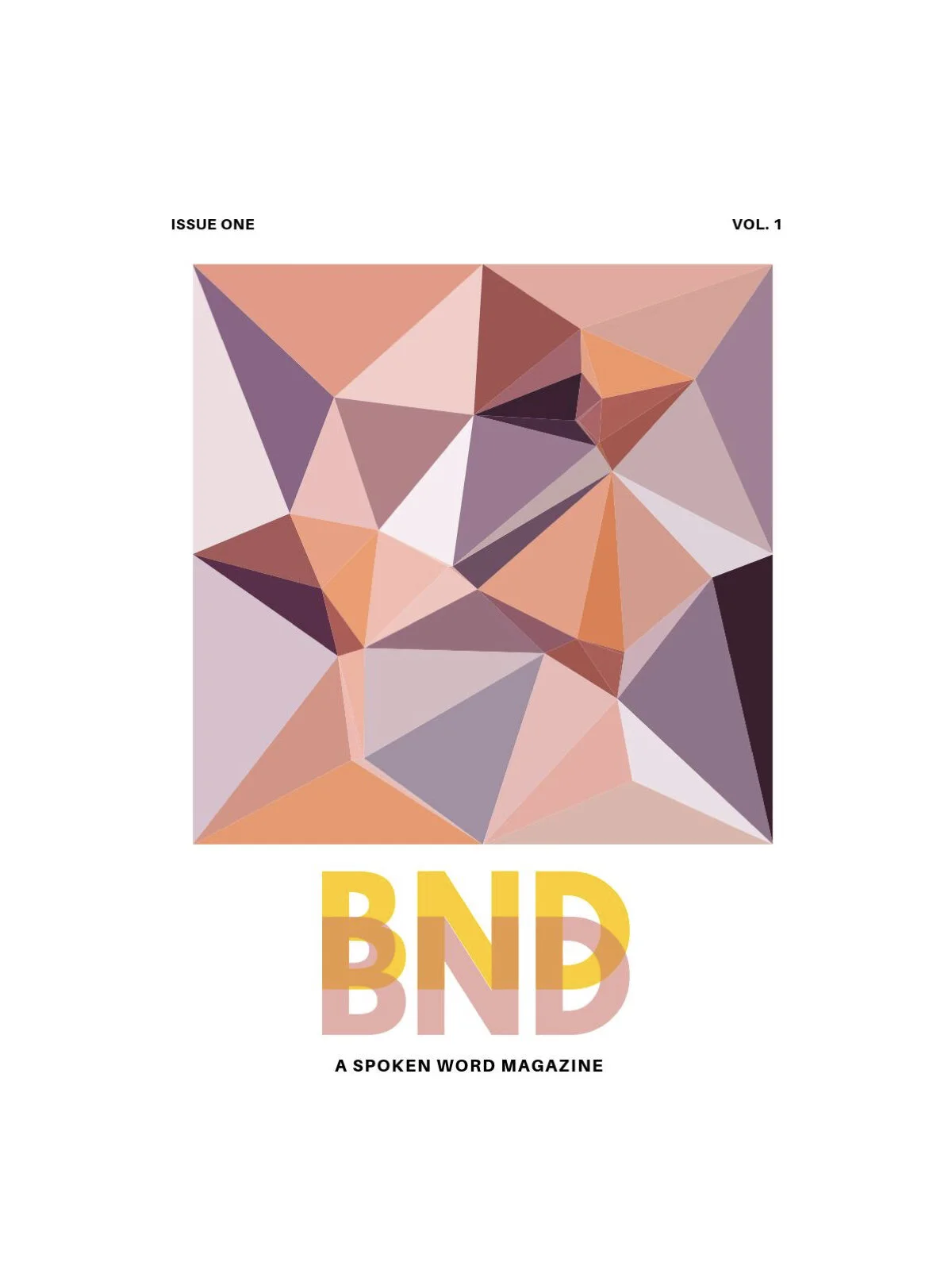
HIGHLIGHTS FROM ISSUE ONE: An Introduction to Spoken Word, Peter Murphy on ‘The Life and Rhymes of of William S. Burroughs’, Abby Oliveira on the hip-hop culture in Northern Ireland, Student Life and Spoken Word by award-winning spoken word artists Paul McNamara, Caoimhe Donnelly from Dublin, Alana Daly Mulligan from Cork, and Irish Times Hennessy New Writer of 2017 Leo Kuhling from Limerick. Spoken word theatre emerging in Dublin and a review of ‘See True’ and ‘Boy Child’ by FeliSpeaks and Dagogo Hart. Reviews on Alice Kinsella’s Sexy Fruit, newcomer Tómas Hade’s 'You're So Much Smaller in the Sunlight', The Dublin Story Slam storytelling podcast, The Circle Sessions’ Second Album featuring music, poetry and comedy.
Sale Price:£6.50 Original Price:£12.99
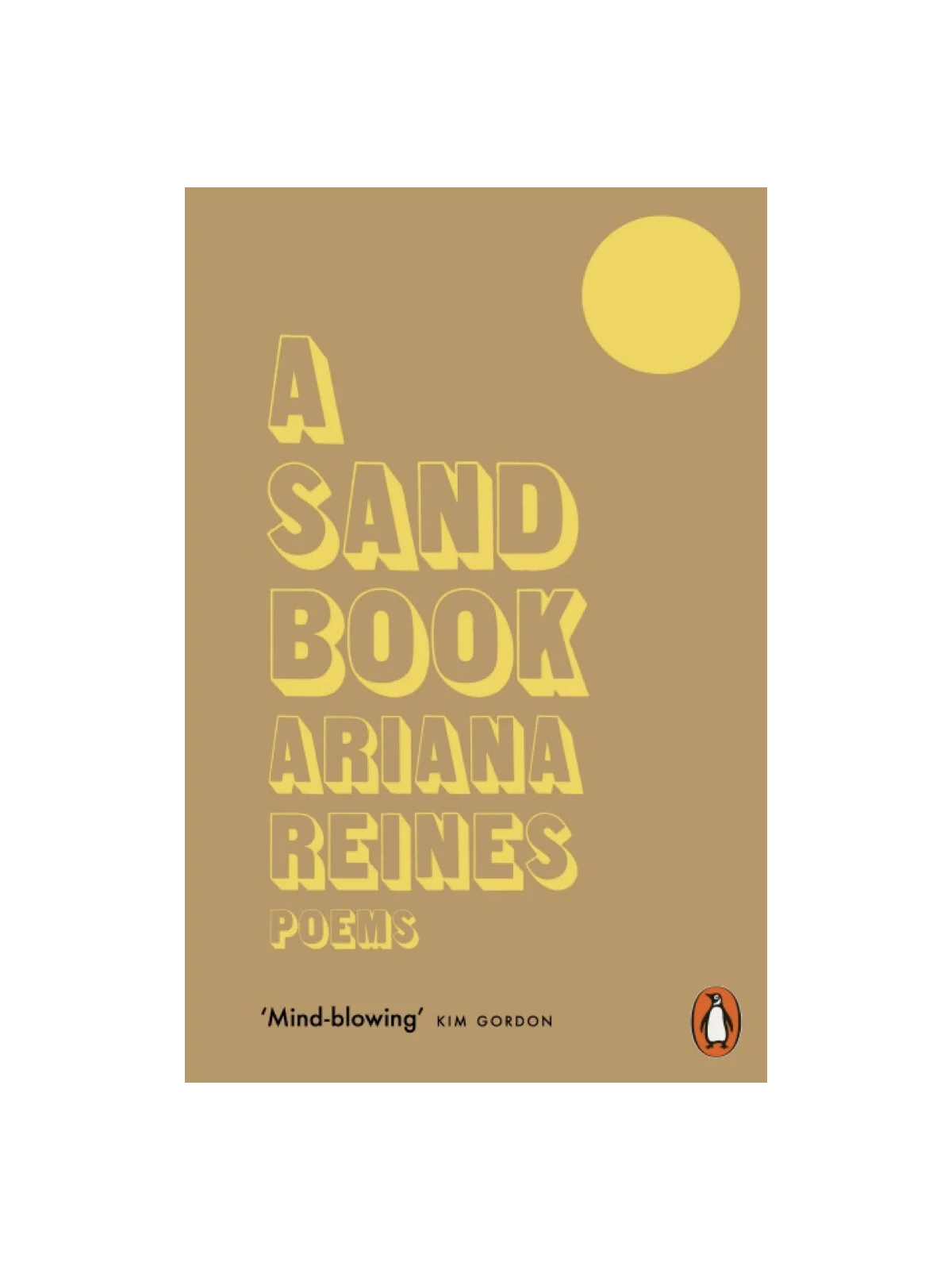
Deadpan, epic, and searingly charismatic, A Sand Book is at once relatable and out-of-this-world. In poems tracking climate change, bystanderism, state murder, sexual trauma, shopping, ghosting, love, and the transcendent shock of prophecy, A Sand Book chronicles new dimensions of consciousness for our strange and desperate times.
What does the destruction of our soil have to do with the weather in the human soul? From sand in the gizzards of birds to the iridescence on the surface of spilt oil, from sand storms on Mars to our internet-addicted present, from the desertifying mountains of Haiti to natural disasters and state violence, A Sand Book is both a travelogue and a book of mourning.
Ariana Reines is author of The Cow (2006), Coeur de Lion (2007) and Mercury (2011). Her play Telephone won several Obie awards. Reines was 2009 Roberta C. Holloway Lecturer in Poetry at the University of California Berkeley; she has taught master classes at Pomona College, the University of California Davis, and the University of Pittsburgh. She lives in New York, NY.
London: Penguin, 2020. First UK edition. 400 pages. 20 x 13 x 3. Paperback.



![Happy #internationalwomensday. #transwomenarewomen #equalpaynow #lesbians
Women’s Work. Women’s Literature Collective. [Two Copies]. London: No date circa 1974. Pamphlets, staple bound. 38pp. Printed at Crest Press.
Poetry collection](https://images.squarespace-cdn.com/content/v1/5e7541426a90d340b980ae06/1655210347837-L1CQU699O8PAGLBST37T/image-asset.jpeg)

Newsletter Block
This newsletter signup form needs a storage option. Edit the block and enter a storage location via the Storage tab.
London/Toronto/Melbourne/Sydney: Cassell, 1948. 1st UK edition hardback. 192pp, last two pages blank, endpapers blank. 8vo.
This is the first edition of this novel to appear under the title Sleep Has His House (it was originally published in New York by Doubleday as The House of Sleep). This was Kavan’s tenth book, her forth as Anna Kavan. On publication it was unsuccessful, but a series of posthumous rereleases by Peter Owen in the 1970s along with the canonisation of her final novel Ice have seen a surge in excitement around this author. Sleep Has His House prefigures that last masterpiece in a number of ways; it takes a shiftling, dreamlike landscape that is as beautiful as it is uncanny. Early editions of this book are extremely scarce, even moreso with a dustjacket still present.
Pictorial dustjacket features disquieting art showing a face moving towards the moon. Printed under postwar economic standards. Dustjacket frayed on top edge, with open tears of about 1cm. Open tear on righthand side 1.3cm. Wear from folds. Open tears to top and bottom of spine. Front flap feature a list of other books published by Cassell. Red cloth board with slightly bend corners, wear to top left of front and small hole at bottom left. Black text on spine. Contents very good.